Key Takeaways
- Children with autism often struggle to understand invisible personal space boundaries due to differences in sensory processing and social perception
- Teaching body boundaries requires explicit, concrete instruction using visual supports, role-play, and consistent practice across all settings
- Social stories and personalized narratives help children internalize what appropriate touch, distance, and consent look like in real situations
- Start with your child's own body autonomy—teaching them to say "no" to unwanted touch—before expecting them to respect others' boundaries
- Patience and repetition are essential; most children need 6-8 weeks of consistent practice before new boundary concepts become automatic
Why Do Children With Autism Struggle With Personal Space?
Many autistic children don't naturally perceive or understand invisible social boundaries around personal space because their brains process social and sensory information differently than neurotypical peers. This isn't a behavior problem—it's a genuine developmental difference.
Autism affects how children interpret social cues and spatial awareness. While a neurotypical child might instinctively feel uncomfortable when someone stands too close, an autistic child may not register that invisible boundary at all. Some autistic children actually seek close physical proximity because they're seeking sensory input, while others may avoid touch entirely due to sensory sensitivities.
Research shows that approximately 50-70% of children with autism experience challenges with understanding and respecting personal space boundaries during their elementary school years.
It's also important to understand that personal space is culturally and contextually dependent—there's no universal "right" distance. This makes it even harder for children who think in concrete, literal terms. A child might understand that they shouldn't hug a stranger, but not understand why standing 6 inches from a peer during conversation is uncomfortable for that peer.
Many autistic children also struggle with theory of mind—the ability to understand that other people have different thoughts, feelings, and preferences than they do. If your child loves hugs, they may assume everyone does. Teaching boundaries requires explicitly explaining that other people have different comfort levels.
How Can You Teach Your Child About Their Own Body Autonomy First?
Start by teaching your child that their body belongs to them and they have the right to say "no" to unwanted touch, even from trusted adults—this foundation makes learning to respect others' boundaries much easier. Body autonomy is the prerequisite for understanding boundaries.
Before your child can respect someone else's personal space, they need to understand and practice saying no to touch they don't want. This might feel counterintuitive when you're trying to teach them not to hug peers without permission, but it's essential.
Here's how to build this foundation:
-
Ask permission before touch. Instead of automatically picking up your child or hugging them, say: "Can I give you a hug?" or "May I help you with your shirt?" Model asking for consent in everyday moments.
-
Respect their "no." When your child says they don't want a hug or to be touched, honor that. Say, "Okay, I respect that. You can have a high-five instead if you'd like." This teaches them that their preferences matter.
-
Use specific body language. Teach your child the names of body parts and what touch is acceptable. Use phrases like: "Hands are for holding hands, hugging, and high-fives. Hands are not for hitting or grabbing."
-
Practice with trusted adults. Let your child practice saying no or setting boundaries with family members in safe situations. Praise them when they do: "Great job telling Grandma you didn't want a hug today!"
-
Distinguish between safe and unsafe touch. Teach your child that safe touches feel good and make them feel happy, while unsafe touches hurt or make them feel scared. Use concrete examples relevant to your child's life.
When children understand they have agency over their own bodies, they're more likely to understand that others have that same right.
What Are the Most Effective Ways to Teach Personal Space Boundaries?
The most effective approach combines explicit instruction, visual supports, role-play practice, and repetition across multiple settings—not just one conversation or lesson. Children with autism learn best through concrete, multi-sensory methods.
Here are research-backed strategies that work:
Use Visual Supports and Concrete Measurements
Autistic children often think in visual, concrete terms. Abstract concepts like "respect people's space" don't work. Instead:
- Draw circles around your child on the floor using tape, showing "my space" and "your space."
- Use a measuring tape to show distances: "Friends like to stand about 12-18 inches away during conversation."
- Create a visual chart showing different distances for different relationships: family members might allow closer proximity than classmates or strangers.
- Use color-coded zones: green zone (safe to touch, like family), yellow zone (ask first, like friends), red zone (don't touch, like strangers).
These visual tools make the invisible visible, which is crucial for autistic learners.
Leverage Social Stories
Social stories are one of the most evidence-based tools for teaching social skills to children with autism. They work by using concrete narrative and visual supports to explain social situations and expected behaviors.
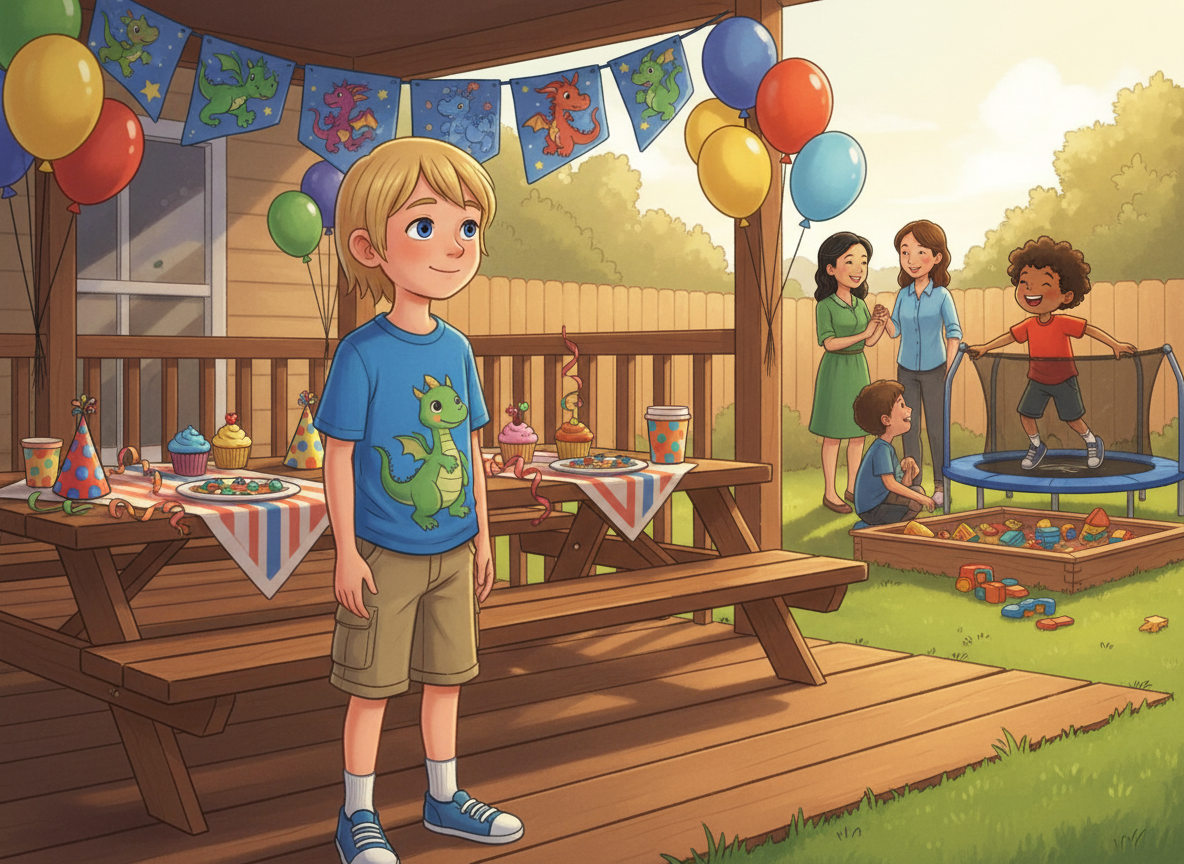
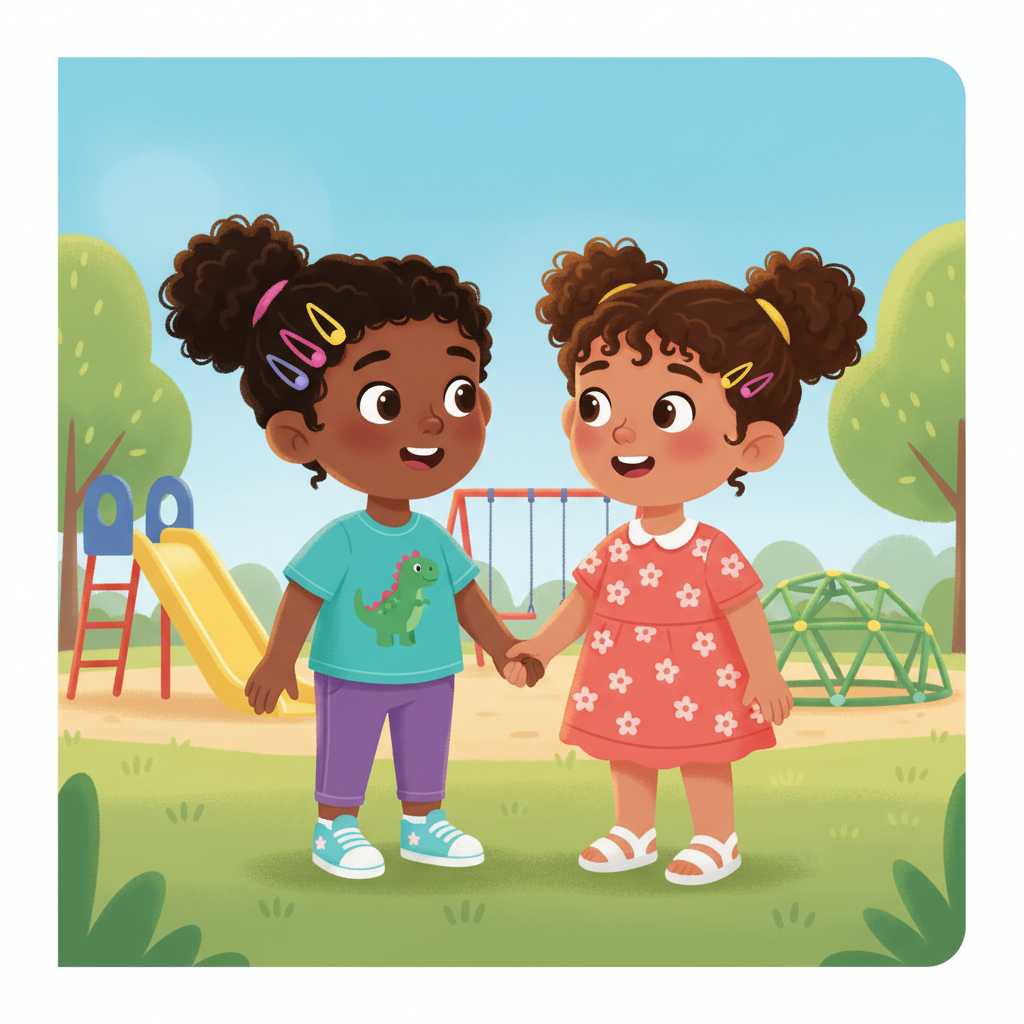
Consider using GrowTale's personalized social stories to reinforce boundary concepts. Stories like "Going to a Birthday Party" and "Making a New Friend" can be customized to include specific boundary scenarios your child encounters. Reading these stories together 2-3 times per week helps children internalize social expectations.
You can also write simple social stories specific to your child's challenges. For example: "When I see my friend at school, I can wave and say hello. I can stand about two feet away. If my friend wants a hug, they will say 'hug please' and open their arms. Then I can give them a hug."
See the research article "Social Stories and Autism" for more on why this approach is so effective.
Practice Role-Play and Rehearsal
Role-play is one of the most underutilized tools for teaching boundaries. It works because it's safe practice in a controlled environment:
-
Act out scenarios your child encounters regularly: greeting a friend, standing in line at school, playing a game with peers.
-
Use your child's favorite characters or toys to make it engaging. If your child loves dinosaurs, use dinosaur figures to demonstrate appropriate distance.
-
Let your child practice both roles. First, they watch you model appropriate behavior. Then, they practice being the person respecting boundaries, and you practice being someone who doesn't.
-
Provide immediate feedback. "Great job! You stood right here and asked before you gave a hug. That's exactly what friends like."
-
Repeat the same scenarios at least 5-10 times. Repetition builds automaticity.
Create a Personal Space Tool
Some children benefit from a tangible "personal space" tool:
- A hula hoop or circle they can place around themselves to visualize their space
- A "personal space bubble" drawn on a piece of paper they carry
- A wristband or object that reminds them to think about distance
- A measuring stick or arm's-length marker to practice the right distance
These tools make the abstract concept of space concrete and manageable.
How Do You Address Boundary Issues in Real-Time Situations?
When your child violates a boundary in the moment, respond calmly and immediately with brief redirection, followed by practice and praise when they get it right. Consistency across situations is critical.
Real-time teaching is where boundaries actually stick. Here's what to do:
In the Moment: The 3-Step Response
-
Stop the behavior gently. Use a calm, neutral tone: "Stop. Let's check our space." Physical redirection (gently moving your child back) combined with words works better than words alone.
-
Remind them of the rule. "Friends like to stand about here (show distance). Let's practice." Keep it short and concrete—no lectures.
-
Praise the correction immediately. "Perfect! You're standing the right distance now. Good job listening." Positive reinforcement is more powerful than punishment.
Avoid shame or anger. Your child isn't being disrespectful on purpose—they're still learning.
Prepare for High-Risk Situations
Identify situations where your child struggles most:
- Greeting peers at school
- Playing games or activities in groups
- Waiting in line
- Transitions between activities
Before these situations, do a quick rehearsal: "Remember, at school we stand about here from our friends. Let's practice." This primes your child's brain.
Communicate With Teachers and Caregivers
Boundary learning happens across all settings. Share your teaching strategy with teachers, therapists, and other caregivers:
- "We're using a visual distance marker. Can you remind [child] about 'standing here' when needed?"
- "We're practicing saying 'Can I have a hug?' before hugging friends."
- "We praise immediately when [child] gets the distance right."
Consistency across environments accelerates learning.
What Should You Do If Your Child Resists Physical Boundaries?
Some children resist boundaries because they're seeking sensory input, have anxiety about proximity, or are overwhelmed by the new expectation—address the underlying cause rather than just enforcing the rule. Understanding the "why" is crucial.
If your child frequently violates personal space boundaries, consider whether there's an underlying sensory or emotional need:
Sensory-Seeking Behavior
If your child is seeking close proximity or physical contact:
- Provide appropriate sensory input. Heavy work activities (pushing, pulling, carrying), deep pressure input (weighted blankets, tight hugs when they ask), or movement breaks might reduce the urge to invade others' space.
- Offer alternatives. "I see you want to be close. Let's do a squeeze hug, then you can stand here with your friends."
- Increase structured physical contact. Regular wrestling, dance parties, or organized physical play might reduce boundary-crossing.
Anxiety or Overwhelm
If your child is invading space due to anxiety:
- Identify triggers. Does it happen in crowded settings? New situations? Transitions?
- Provide a comfort object. A fidget, stuffed animal, or pressure vest might help them feel regulated enough to maintain distance.
- Offer a safe space. Some children need to physically separate from peers when overwhelmed. This is okay and can be built into the plan.
Difficulty With the Concept Itself
If your child simply doesn't understand despite instruction:
- Slow down. You may be moving too fast. Spend 2-3 weeks on one concept (like "asking before hugging") before adding another.
- Use more concrete supports. Add more visuals, role-play more frequently, use physical markers.
- Consult an occupational or speech therapist. They can assess whether sensory processing or motor planning issues are contributing.
How Long Does It Take for Boundaries to Become Automatic?
Most children need 6-8 weeks of consistent, daily practice before a new boundary concept becomes somewhat automatic, and 3-6 months before it's truly internalized across all settings. This is normal developmental learning, not a reflection of your child's ability.
Don't expect instant change. Boundary learning is gradual:
- Weeks 1-2: Your child needs reminders almost every time. Celebrate small improvements.
- Weeks 3-4: They remember maybe 30-40% of the time without reminders. Continue consistent practice.
- Weeks 5-8: They remember 60-70% of the time. Praise effort and progress.
- Months 3-6: Behavior becomes more automatic, though reminders may still be needed in new or high-stress situations.
Progress isn't linear. Your child might do great one day and regress the next, especially when tired, stressed, or in a new environment. This is completely normal and doesn't mean they've forgotten.
If you'd like a personalized version of boundary-teaching stories for your child, you can create one free at GrowTale. Stories tailored to your child's specific situations and learning style are often more effective than generic instruction.
Frequently Asked Questions
What if my child becomes upset when I redirect their boundary behavior?
Upset reactions are common and don't mean your approach is wrong. Stay calm and empathetic: "I know you wanted to hug. Hugs are nice. Let's ask first next time." Avoid backing down on the boundary itself, but offer comfort and alternative ways to connect. If your child is extremely distressed, take a break and try again later. Over time, they'll learn that boundary redirection isn't punishment.
Is it okay to allow my child to violate boundaries with family members but not peers?
It's actually more confusing for children with autism to have different rules in different contexts. Consistency is more important than flexibility for autistic learners. Instead, help family members understand and reinforce the same boundaries: "We're teaching [child] to ask before hugging. Can you ask for a hug when you see them?" This consistency across all relationships accelerates learning.
My child has sensory sensitivities and doesn't like being touched at all. How do I teach boundaries when they avoid closeness?
For children who avoid touch, the focus is different: teach them how to communicate their needs and set their own boundaries. Practice phrases like "I need space" or "No hug, please." Use visual supports to show that it's okay to say no and that respecting someone's "no" is important. You're still teaching boundaries—just from the perspective of someone who needs more distance rather than less.
Should I use punishment or consequences if my child keeps invading others' space?
Punishment is usually ineffective for boundary-learning and can increase anxiety or avoidance. Instead, use natural consequences and positive reinforcement. If your child hugs a peer without asking and the peer pulls away upset, that's a natural consequence. Then practice: "See, your friend didn't like that. Let's ask next time." Praise heavily when your child asks first. Positive reinforcement is far more powerful than punishment for teaching new social skills.