Key Takeaways
- Social stories break potty training into small, predictable steps that reduce anxiety and sensory overwhelm for autistic children
- Personalized stories featuring your child's name, favorite characters, and specific bathroom details are significantly more effective than generic narratives
- Consistency, visual supports, and celebrating small wins matter more than speed—potty training timelines for autistic children often differ from neurotypical peers
- Pairing social stories with your child's sensory preferences (fidgets, music, visual schedules) creates a multi-sensory learning experience
- Starting with a story about the bathroom environment itself, before introducing the toilet sequence, helps children feel safe and in control
What Makes Social Stories Effective for Potty Training Autistic Children?
Social stories work for potty training because they use concrete language, predictable sequences, and repeated exposure to reduce anxiety while building understanding of what happens and why. Autistic children often struggle with abstract concepts and unexpected changes, but social stories transform the bathroom experience into a clear, manageable narrative.
Autistic children's brains are wired differently—they often process information more literally and may experience sensory sensitivities around bathrooms (loud flushes, unfamiliar spaces, unexpected textures). A social story acknowledges these challenges directly. Instead of simply saying "use the potty," a good story explains: why we use the toilet, what sounds and sensations to expect, how to ask for help, and what happens afterward.
Research from the National Autism Center identifies social stories as one of 14 established, evidence-based practices for autism spectrum disorder. Studies show that children who learn routines through social stories demonstrate improved independence and reduced challenging behaviors during transitions.
The key difference: social stories aren't just instructions—they're narratives that normalize the experience and help your child feel less alone. When a story character (ideally your child) successfully uses the bathroom, it models the behavior while building confidence.
Why Is Personalization So Important When Teaching Potty Training?
Generic potty training stories have limited impact because they don't address your child's specific sensory needs, bathroom layout, or anxiety triggers—but personalized stories featuring your child's name, favorite colors, and actual bathroom create immediate relevance and engagement.
Imagine the difference between:
- A generic story: "A child goes to the bathroom and uses the toilet."
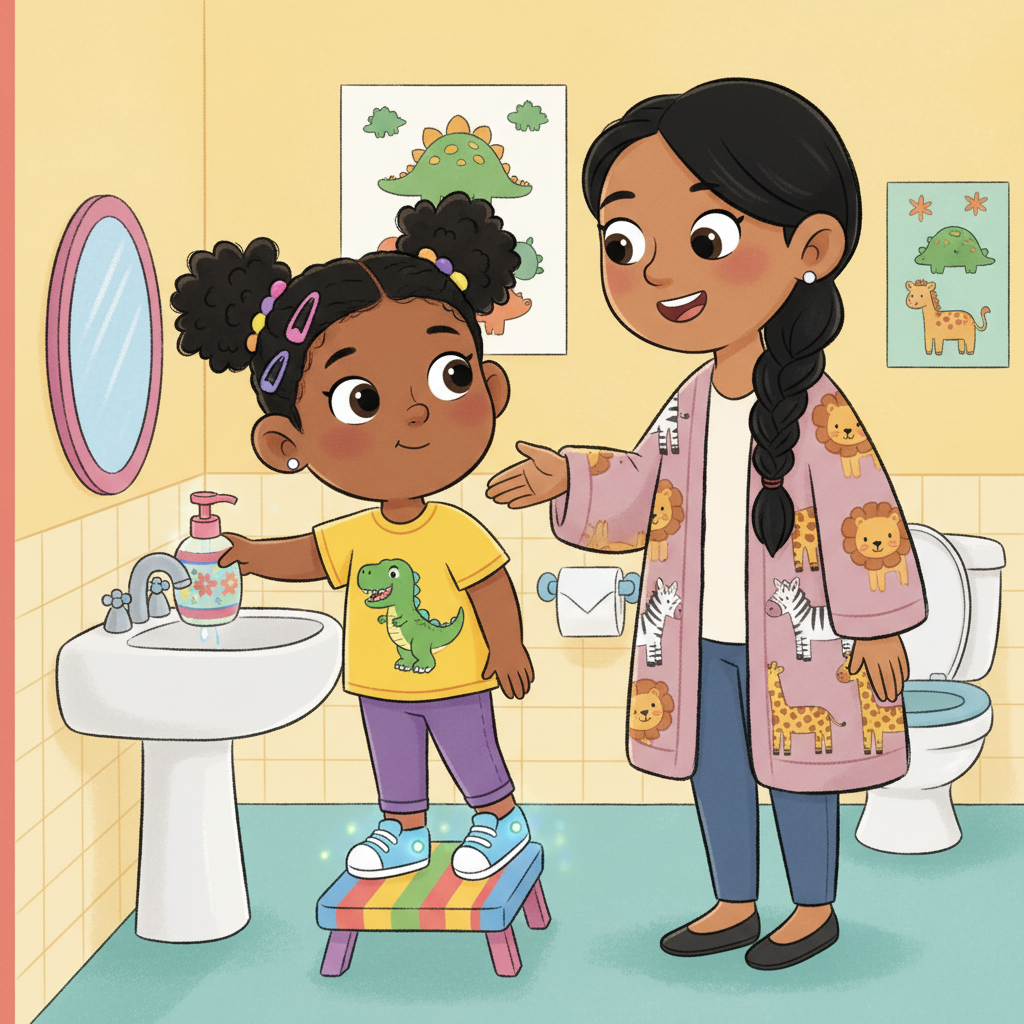
- A personalized story: "Maya goes to her blue bathroom. She can see the step stool and her favorite soap. The toilet makes a loud sound, but Maya knows it's okay. She covers her ears if she needs to."
The second story is exponentially more powerful because it:
- Features your child as the hero
- Describes the actual bathroom your child will use
- Acknowledges sensory concerns directly
- Offers coping strategies (covering ears) before anxiety strikes
- Builds familiarity through repetition
GrowTale's personalization research shows that children engage 3x longer with stories featuring their own name and circumstances. For potty training—which requires sustained motivation and repeated practice—this engagement difference is critical.
How Do You Create a Social Story for Potty Training Step-by-Step?
Start by observing your child's current bathroom habits, sensory sensitivities, and communication style, then write a simple story that introduces one small step at a time—never the entire process at once.
Step 1: Assess Your Child's Starting Point
Before writing, answer these questions:
- Does your child show any interest in the bathroom or wearing underwear?
- What sensory sensitivities exist? (Loud sounds? Unfamiliar spaces? Water temperature?)
- Does your child communicate verbally, through AAC, or through behavior?
- What motivates your child? (Favorite characters, colors, activities?)
- What's your child's attention span for stories?
This foundation determines whether you start with a story about entering the bathroom, sitting on the toilet, or the sounds the toilet makes—not jumping straight to the full sequence.
Step 2: Break Potty Training Into Micro-Steps
Instead of one story about "using the potty," create separate stories for:
- Visiting the bathroom (just going in, no pressure)
- Sitting on the toilet (clothed, if needed)
- The toilet flushing (with coping strategies for loud sounds)
- Washing hands afterward
- Celebrating success
This scaffolding prevents overwhelm. Many parents jump to step 5 when their child is still anxious about step 1.
Step 3: Write in First Person, Present Tense
Use your child's name and write as if they're experiencing it now:
"My name is [Child's Name]. Today I'm going to the bathroom. The bathroom is in my house. It has a white toilet and a blue step stool. I feel a little nervous, but that's okay. My mom/dad is with me."
Avoid:
- Future tense ("You will go to the bathroom") — feels abstract
- Second person ("You should use the potty") — feels like instruction, not narrative
- Pressure language ("You need to," "You must") — increases anxiety
Step 4: Include Sensory Details and Coping Strategies
This is where personalization becomes therapeutic:
- "The toilet makes a loud WHOOSH sound. I might cover my ears. That's okay."
- "The water is warm when I wash my hands. I can smell the soap. It smells like [child's favorite scent]."
- "After using the toilet, I get a sticker on my chart. I like stickers."
These details transform an abstract, scary experience into something concrete and manageable.
Step 5: Practice Reading Together Regularly
Read the story:
- Once daily (ideally before bathroom visits)
- In a calm, matter-of-fact tone (not overly enthusiastic)
- With visuals: photos of your actual bathroom, pictures of the steps
- Without pressure: "We're just reading the story. No pressure to do anything today."
Repetition is essential. Many parents see progress after 2-3 weeks of consistent reading.
What Role Do Sensory Considerations Play in Potty Training Success?
Autistic children often experience heightened sensory sensitivities in bathrooms—loud toilet flushes, echoing sounds, unfamiliar textures, and unexpected water—so social stories must directly address these triggers and offer concrete coping strategies.
Common sensory barriers to potty training:
- Auditory: Loud toilet flush, running water, bathroom echoes
- Tactile: Unfamiliar toilet seat texture, wet hands, clothing transitions
- Olfactory: Bathroom smells, cleaning products
- Visual: Bright lights, unfamiliar space, water movement
- Proprioceptive: Sitting on an unfamiliar surface, balance concerns
Your social story should acknowledge these directly:
"When I flush the toilet, it makes a loud sound. I can cover my ears if I need to. I can also flush after I leave the bathroom. My mom/dad can flush for me. There are many ways to do this."
This approach:
- Validates sensory experiences (not dismissing them as "silly")
- Offers agency ("I can choose")
- Provides alternatives ("My parent can help")
- Normalizes accommodations
Pair your story with environmental modifications:
- Use a toilet seat reducer (smaller, more secure)
- Add a step stool for foot support and security
- Install a softer, quieter toilet seat
- Use a visual schedule showing each step
- Play calming music or white noise during bathroom time
- Offer a fidget toy or stress ball
- Let your child wear noise-canceling headphones if the flush is triggering
Accommodations aren't "cheating"—they're removing barriers so your child can focus on learning.
How Should You Combine Social Stories With Other Potty Training Strategies?
Social stories are most effective when paired with visual schedules, positive reinforcement, and your child's preferred sensory tools—creating a multi-sensory, low-pressure learning environment.
A comprehensive approach includes:
Visual Supports
- Picture schedule: Photos of each bathroom step (entering bathroom → sitting → flushing → washing hands → leaving)
- Social story: The narrative explaining why and how
- Progress chart: Stickers or tokens for attempts (not just successes)
These work together: the schedule shows what, the story explains why.
Positive Reinforcement
Avoid pressure. Instead:
- Celebrate attempts, not just successes (sitting on the toilet clothed = worthy of praise)
- Use preferred rewards (not necessarily candy—could be extra iPad time, a favorite activity, or a special sticker)
- Offer rewards immediately after the behavior
- Never punish accidents—they're learning data, not failures
Consistent Timing
Autistic children thrive on predictability:
- Read the social story at the same time daily
- Offer bathroom visits at consistent times (after meals, before bed, mid-morning)
- Use the same language each time ("It's bathroom time")
- Maintain the same bathroom environment (same step stool, same soap, same routine)
Involve Your Child in Story Creation
If your child is verbal or can use AAC:
- Ask what they want to include in the story
- Let them choose the character's name
- Ask about sensory concerns ("Does the sound bother you?")
- Involve them in illustrating the story
This builds ownership and investment.
For a ready-made starting point, "Using the Bathroom at Preschool" offers a template you can adapt. You can also explore "Getting Ready for School" to understand how to structure multi-step routines in story format.
What Timeline Should You Expect for Potty Training an Autistic Child?
Potty training timelines for autistic children are often longer than neurotypical peers—expect 3-12 months of consistent practice before reliable daytime continence, and prioritize emotional safety over speed.
Typical neurotypical children may train in 3-6 months. Autistic children often need 6-12 months or longer because:
- Sensory sensitivities require gradual exposure
- Executive function differences affect initiation and sequencing
- Anxiety around new routines needs time to resolve
- Communication challenges may mask understanding
This isn't a failure—it's normal neurodiversity. Pushing too fast often backfires, causing regression and increased anxiety.
A realistic timeline:
- Months 1-2: Read story daily, visit bathroom clothed, build comfort with space
- Months 2-4: Sit on toilet (clothed or not), no pressure for results
- Months 4-6: Introduce actual toileting, celebrate any success
- Months 6-12: Build consistency, manage accidents without shame
- Month 12+: Approach independence, with setbacks being normal
Signs of readiness (not age-based):
- Stays dry for 2+ hours
- Shows interest in bathroom or underwear
- Can follow 2-3 step directions
- Communicates (verbally or non-verbally) when uncomfortable
- Shows awareness of bodily functions
If your child shows none of these signs, waiting is completely okay. Forcing potty training before readiness creates trauma, not skill.
Frequently Asked Questions
What if my child refuses to read the social story or go to the bathroom?
Refusal often signals anxiety or sensory overwhelm, not defiance. Try reducing pressure entirely: leave the story in the bathroom without requiring your child to read it, use it as background material you read casually, or create a shorter, simpler version. Sometimes the story itself is too long or has too much text. You can also try pairing the story with a preferred activity—read it while your child plays with a favorite toy, or incorporate it into wind-down time. If resistance persists, consult your child's occupational therapist or behavioral specialist to identify specific barriers.
Should I use a potty chair or a regular toilet with a seat reducer?
This depends on your child's sensory preferences and physical needs. A potty chair offers independence and security (no falling risk), but adds another step (emptying it). A toilet with a seat reducer and step stool feels more "grown-up" and integrates into family routines. Many families start with a potty chair for comfort, then transition to the regular toilet. Let your child's comfort guide the choice—there's no "right" answer. Your social story can feature whichever option you choose, normalizing it through repeated exposure.
What's the difference between a social story and a visual schedule for potty training?
A social story is a narrative that explains why we use the bathroom, what to expect, and how to handle challenges. A visual schedule is a sequence of pictures showing the steps (enter bathroom, sit, flush, wash hands). Together, they're powerful: the schedule shows what to do, the story explains why and how to feel about it. A schedule without a story can feel like instructions; a story without a schedule can lack concrete guidance. Use both for maximum effectiveness.
Can I use GrowTale to create a personalized potty training story for my child?
Yes! If you'd like a personalized version of a potty training story for your child—featuring their name, actual bathroom, favorite characters, and specific sensory accommodations—you can create one free at GrowTale. Personalized stories are significantly more engaging and effective than generic templates because they speak directly to your child's experiences and needs. You can also adapt existing stories from GrowTale's library, like "Using the Bathroom at Preschool," to match your child's home environment.
Potty training an autistic child requires patience, flexibility, and a deep understanding of your child's sensory and emotional needs. Social stories aren't magic—they're a research-backed tool that makes an abstract, overwhelming experience feel manageable and safe.
Start small. Celebrate attempts. Prioritize your child's emotional safety over speed. And remember: there's no "right" age for potty training. When your child is ready, and you've built the foundation through consistent exposure and support, the skills will follow.
Your child isn't broken. Their brain works differently, and they deserve an approach that honors that difference while gently building new skills. Social stories do exactly that.