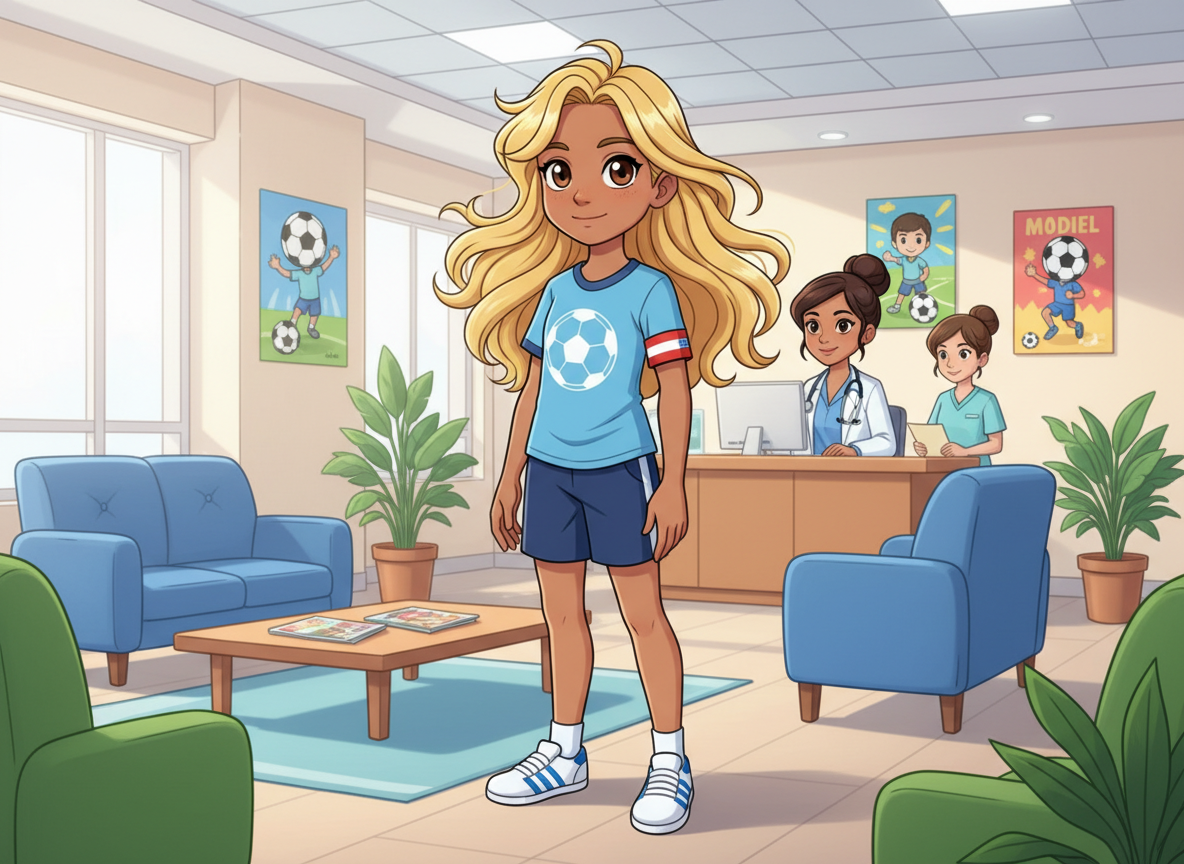
Key Takeaways
- Social stories are short, personalized narratives that teach children specific skills, routines, and social situations using their perspective and language
- Created by autism specialist Carol Gray in 1991, social stories use a specific formula (descriptive, perspective, directive, and affirmative sentences) that makes them different from regular stories
- Research shows social stories are most effective when personalized to your child's interests, name, and specific situation—generic versions work, but tailored ones work significantly better
- Social stories work for autism, ADHD, anxiety, and developmental delays because they provide clear expectations, reduce uncertainty, and build confidence through repetition
- The best social stories are read regularly (ideally daily or several times per week) before the challenging situation, not as punishment or correction
What Exactly Are Social Stories and How Do They Differ from Regular Stories?
Social stories are brief, personalized narratives written from your child's perspective that describe a specific situation, skill, or social expectation in concrete, reassuring language. Unlike bedtime stories, social stories aren't meant to entertain—they're designed to teach.
Created by autism specialist Carol Gray in 1991, social stories follow a precise formula that distinguishes them from regular children's books. A true social story includes:
- Descriptive sentences: "When I wake up, it is time to get ready for school."
- Perspective sentences: "My teacher helps children learn new things. I am learning at school."
- Directive sentences: "I will try to use a quiet voice in the hallway."
- Affirmative sentences: "Using a quiet voice helps my friends focus on learning."
This structure matters. A generic story might say, "You should listen in class." A social story says, "Mrs. Chen is my teacher. She helps me learn. When I listen to Mrs. Chen, I understand the lesson better. I feel proud when I listen." The difference is profound—one commands, the other explains and reassures.
According to the National Autism Center, social stories are one of 14 established, evidence-based treatments for autism spectrum disorder, with strong research support for their effectiveness in teaching social and behavioral skills.
Social stories work across different learning styles because they:
- Use simple, concrete language matched to your child's comprehension level
- Include visuals (illustrations, photos, or symbols) that reinforce the text
- Present information from the child's viewpoint, not an adult's
- Repeat key concepts without lecturing or shaming
- Create a predictable "script" for confusing or anxiety-provoking situations
Why Do Social Stories Work for Children with Autism, ADHD, and Anxiety?
Social stories reduce anxiety and behavior challenges by replacing uncertainty with clear, concrete expectations—children know exactly what to expect and what's expected of them. This is especially powerful for neurodivergent kids whose brains process social and sensory information differently.
Children with autism often struggle with theory of mind—understanding what others are thinking or feeling. A social story bridges that gap by explicitly stating: "When my friend is quiet, they might be thinking. I can wait for them to speak." No guessing. No confusion.
For kids with ADHD, social stories provide structure and repetition without nagging. Instead of hearing "Use your quiet voice!" seventeen times a day, your child reads a story that normalizes the expectation. The repetition helps cement the behavior without triggering shame or defensiveness.
Children with anxiety benefit because social stories:
- Predict the unpredictable: "First, we will arrive at the doctor's office. Then, we will check in at the desk. Next, we will wait in the waiting room. Finally, the doctor will see us."
- Normalize feelings: "Sometimes I feel nervous about new situations. That's okay. My body is trying to keep me safe."
- Offer coping strategies: "When I feel worried, I can take three deep breaths. I can ask my teacher for help. I can remember that I am safe."
- Build confidence: "I have done hard things before. I can do this too."
Research shows that personalized social stories are significantly more effective than generic ones. When a story uses your child's actual name, includes their favorite character, and addresses their specific challenge, engagement and retention improve dramatically.
For example, compare:
- Generic: "It's important to brush your teeth before bed."
- Personalized: "My name is Emma. Before I go to bed, I brush my teeth. I use my purple toothbrush. I brush for two minutes. When I brush my teeth, I keep them strong and healthy. I feel proud of my clean teeth."
Emma is far more likely to connect with the second version.
How Do You Create a Social Story for Your Child?
Creating a social story involves identifying a specific challenge, writing 5–10 sentences from your child's perspective using Carol Gray's sentence types, and adding visuals that match your child's interests and comprehension level. You don't need to be a writer—simple, honest language works best.
Here's a step-by-step process:
-
Identify the target behavior or situation: Is it trouble with transitions? Difficulty making friends? Anxiety about haircuts? Resistance to bedtime? Pick one specific challenge—don't try to cover everything in one story.
-
Gather information: Observe what triggers the struggle. What does your child do? What do you want them to do instead? What might they be feeling or thinking?
-
Write from your child's perspective: Use "I" statements. Use your child's actual name. Include concrete details: "I am in Mrs. Johnson's class. There are 18 students in my class. Some students sit at tables. Some students sit at desks."
-
Follow the sentence formula:
- Descriptive: State facts about the situation
- Perspective: Explain why the behavior matters or how others feel
- Directive: Suggest what your child can do (gently, not commandingly)
- Affirmative: Celebrate the desired behavior
-
Keep it short: 5–10 sentences is ideal. Longer stories lose engagement.
-
Add visuals: Photos of your child, illustrations, symbols, or even emojis help younger kids and visual learners. Visuals also make the story more personal and memorable.
-
Read it regularly: The magic of social stories is repetition. Read it daily or several times per week, ideally before the challenging situation (not as punishment after a meltdown).
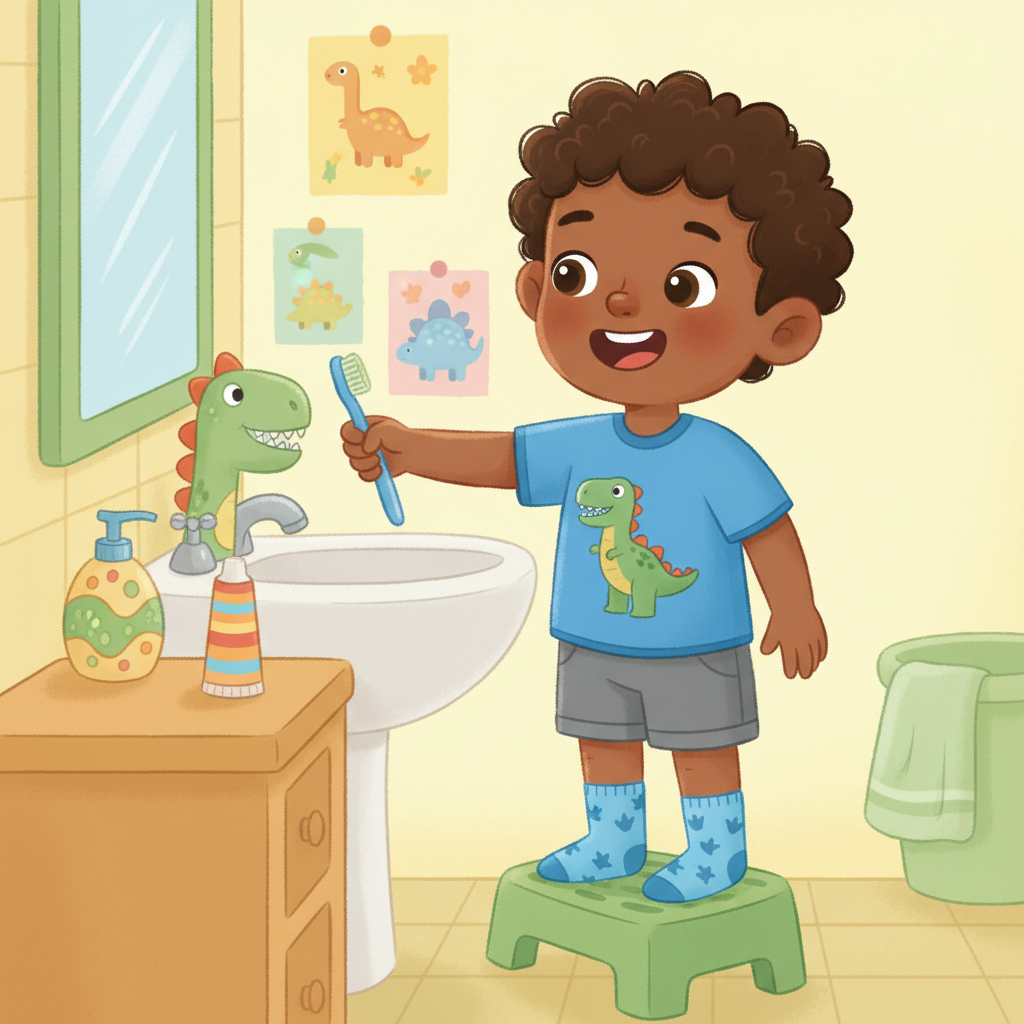
For example, if your child struggles with "Brushing My Teeth at Night", you might write:
"My name is Lucas. At night, I brush my teeth. I use my blue toothbrush and mint toothpaste. I brush for two minutes. When I brush my teeth, they stay strong and healthy. My dentist is happy when my teeth are clean. I feel proud when I brush my teeth. Brushing my teeth is a good habit."
Then add a photo of Lucas with his toothbrush, or draw simple pictures of each step.
When Should You Use Social Stories, and How Often?
Social stories work best when read regularly before a challenging situation—daily or several times per week—not as punishment or correction after a behavior occurs. Timing and consistency are everything.
The ideal rhythm:
- Daily routines: Read every morning or every night. Stories about "Getting Ready for School" or "My Daily Vitamin Routine" should become part of the routine itself.
- Transitions or new situations: Read for several weeks before the change. If your child is starting a new school, begin reading a "My First Day at New School" story at least 2–3 weeks in advance.
- Ongoing social skills: Stories about "Making a New Friend" or "Taking Turns With Friends" can be read weekly during periods when your child is working on that skill.
- Emotional regulation: Stories about "When I Lose at Games" or "Amir Calms Down When Frustrated" work best when read regularly, not just after a meltdown.
Avoid using social stories as punishment. If your child has a meltdown and you immediately pull out a story, they'll associate the story with shame and resistance. Instead, wait until emotions have settled, then read it matter-of-factly as part of a regular routine.
How long does it take to work? Most parents notice small shifts within 2–4 weeks of consistent reading. Bigger changes often take 6–8 weeks. Every child is different, but consistency matters more than perfection.
If a story isn't working after 8 weeks, ask yourself:
- Am I reading it at the right time (before, not after the challenge)?
- Is it personalized enough to my child's interests?
- Is the language too complex or too simplistic?
- Does my child actually understand what behavior change I'm asking for?
What Does the Research Actually Say About Social Stories?
Research confirms that social stories are effective for teaching social skills, reducing anxiety, and improving behavior in children with autism and ADHD—but effectiveness depends heavily on personalization, consistency, and proper implementation. It's not magic, but it's evidence-based.
A meta-analysis of 19 studies found that social stories produced moderate to large improvements in social and behavioral skills, with the strongest results when stories were personalized to the individual child and read consistently over time.
Key research findings:
- Personalization matters: Individualized stories outperform generic templates by a significant margin. Your child's name, interests, and specific situation make all the difference.
- Consistency is critical: Reading a story once won't work. Daily or near-daily repetition produces the best outcomes.
- Best for explicit teaching: Social stories excel at teaching concrete skills (how to tie shoes, how to greet a friend) and reducing anxiety about predictable situations (doctor visits, first days of school). They're less effective for managing sudden, unpredictable behavior.
- Works across diagnoses: Effective for autism, ADHD, anxiety, developmental delays, and even typically developing children who struggle with specific skills.
- Combines well with other strategies: Social stories work even better when paired with visual schedules, token reward systems, or direct practice of the skill.
For a deeper dive into the research, GrowTale's "Social Stories Research: What the Evidence Actually Says" breaks down the studies and what they mean for your child.
The bottom line: Social stories aren't a cure-all, but they're one of the most evidence-backed, accessible, and family-friendly tools available for teaching kids with different brains.
How Can You Make Social Stories Part of Your Daily Routine?
Integrate social stories into existing routines by reading them at the same time and place each day—bedtime, breakfast, or right before the challenging activity. When stories become habit, kids internalize the messages without resistance.
Practical ways to weave them in:
- Bedtime routine: Read a social story about the next day's schedule or about a skill you're working on (like "When Plans Change") right before bed. It plants the idea in their mind overnight.
- Breakfast table: Keep printed stories in a folder and read one while eating breakfast. It's calm, routine, and low-pressure.
- Right before the activity: Reading a story about "Using the Bathroom at Preschool" five minutes before drop-off reinforces the skill when it's most relevant.
- Transition times: Use stories to smooth transitions. "We're leaving the park in five minutes. Let me read our story about what happens next."
- Digital format: Some families use tablets or phones to read stories, which can feel less like "learning" and more like a fun activity.
Make it interactive without forcing it:
- Ask simple questions: "What does Lucas do first?"
- Let your child turn the pages
- Point out details in the pictures
- Read with enthusiasm, but don't overdo it
- If your child resists, back off—force creates negative associations
Storage tip: Keep stories in a special folder, binder, or box so they're easy to grab. The easier it is to access, the more consistently you'll use them.
Frequently Asked Questions
Can I use social stories for typically developing children, or are they just for kids with autism and ADHD?
Social stories work beautifully for any child who struggles with a specific skill or situation—autism, ADHD, anxiety, developmental delays, or just typical childhood challenges. A typically developing child who's anxious about a new sibling or struggling with sibling conflict benefits just as much. Stories like "My New Baby Sister" or "My Bigger, Blended Family" address universal childhood transitions. The beauty of social stories is they're a universal teaching tool—no diagnosis required.
How long should a social story be, and what's the right reading level?
Most social stories are 5–10 sentences, which takes 2–3 minutes to read. Aim for a reading level slightly below your child's actual level—simple, concrete language works better than complex sentences. Use short paragraphs, active voice, and concrete details instead of abstract concepts. If your child is 7 years old but reads at a 5-year-old level, write for the 5-year-old level. If your child is nonverbal, focus on visuals with minimal text. The goal is understanding and engagement, not challenge.
What if my child resists reading the story or refuses to engage?
Resistance is common and usually means the story isn't quite right yet. Try: simplifying the language, making it shorter, adding more visuals, using their favorite character, reading at a different time, or letting them hold the book and turn pages. If your child associates the story with a stressful situation (like you reading it right after a meltdown), they'll resist—reset by reading it at a neutral time with no emotional weight. Sometimes a story needs tweaking or even retiring. Not every story works for every child, and that's okay. Observe what does engage your child and build from there.
How is GrowTale's personalized social story creation different from just writing one myself?
GrowTale's app creates fully personalized, illustrated social stories in minutes—you answer questions about your child's situation, interests, and challenges, and the app generates a story tailored to your child's name, perspective, and specific context. It includes professional illustrations, optional audio narration, and a beautiful format that feels special and engaging. While you absolutely can write stories yourself (and many parents do!), GrowTale saves time and ensures the story follows Carol Gray's evidence-based formula. If you'd like a personalized version of any of these topics for your child, you can create one free at GrowTale.
Social stories are one of the most powerful, accessible tools in your parenting toolkit. They honor how your child's brain works, teach without shame, and build confidence through repetition and personalization. Whether you're navigating a daily routine, a social challenge, an emotional difficulty, or a major life transition, a well-crafted social story can transform resistance into understanding.
Start small: pick one specific challenge, write or create a simple story, and commit to reading it consistently for 4–6 weeks. You'll likely be amazed at what changes when your child knows exactly what to expect and exactly what you're asking of them.
Your child doesn't need to be "fixed." They need to understand the world in a way that makes sense to their brain. That's what social stories do.