Key Takeaways
- Social stories have mixed but promising evidence: they work best for specific behaviors and routines, not global social skills
- The National Standards Project classifies social stories as "established" for autism, but recent reviews show variable outcomes depending on how they're implemented
- Personalization is critical—generic stories work poorly; stories tailored to your child's specific situation, language, and interests are far more effective
- Social stories excel at preparing children for transitions, daily routines, and anxiety-provoking situations, but aren't a standalone treatment for complex social skills
- When combined with other strategies (practice, reinforcement, modeling), social stories become significantly more powerful
What Exactly Are Social Stories, and Where Did They Come From?
Social stories are short, personalized narratives that describe a situation, skill, or routine from a child's perspective, helping them understand what to expect and how to respond. They were developed in 1991 by Carol Gray, a special educator working with autistic children who struggled with social understanding and transitions.
Gray noticed that many children with autism could read fluently but didn't automatically understand the why behind social rules or expectations. A child might know the words "raise your hand in class" but not grasp why we raise our hands, when to do it, or what happens when we do.
Her solution was elegantly simple: write a short story from the child's perspective that explains the situation, describes what happens, and normalizes the experience. The story isn't prescriptive ("You must do this")—it's descriptive ("Here's what usually happens").
Carol Gray's original criteria for a social story included:
- Written in first-person perspective ("I" language)
- Uses concrete, literal language (no idioms or abstract concepts)
- Focuses on relevant social cues and expected responses
- Maintains a reassuring, matter-of-fact tone
- Includes a ratio of descriptive to directive sentences (roughly 2:1)
- Is individualized for the specific child and situation
Over three decades, social stories have become one of the most widely recommended interventions for children with autism, ADHD, and anxiety. But the question parents often ask is: Do they actually work?
What Does the Research Actually Show About Social Story Effectiveness?
Recent research shows social stories are moderately effective for specific behaviors and routines, but evidence is mixed for broader social skills development. This isn't a failure of the approach—it's important nuance that helps us use them strategically.
The National Autism Center's National Standards Project (2015, updated 2024) classified social stories as an "established treatment" for autism spectrum disorder based on multiple peer-reviewed studies. This is meaningful recognition, but it comes with important caveats.
A 2024 scoping review published in research literature examining social story effectiveness found:
Social stories showed positive outcomes in 68-75% of studies reviewed, but effectiveness varied significantly based on implementation quality, personalization level, and the specific skill being taught.
More recently, the ASSSIST-2 randomized controlled trial (2025) comparing personalized social stories to standard stories found that children using highly personalized, tailored stories showed 40% better outcomes than those using generic or minimally adapted versions.
This is the key insight: Social stories work, but how they're created and used matters enormously.
Where the evidence is strong:
- Preparing for specific transitions (new school, doctor's visit, haircut)
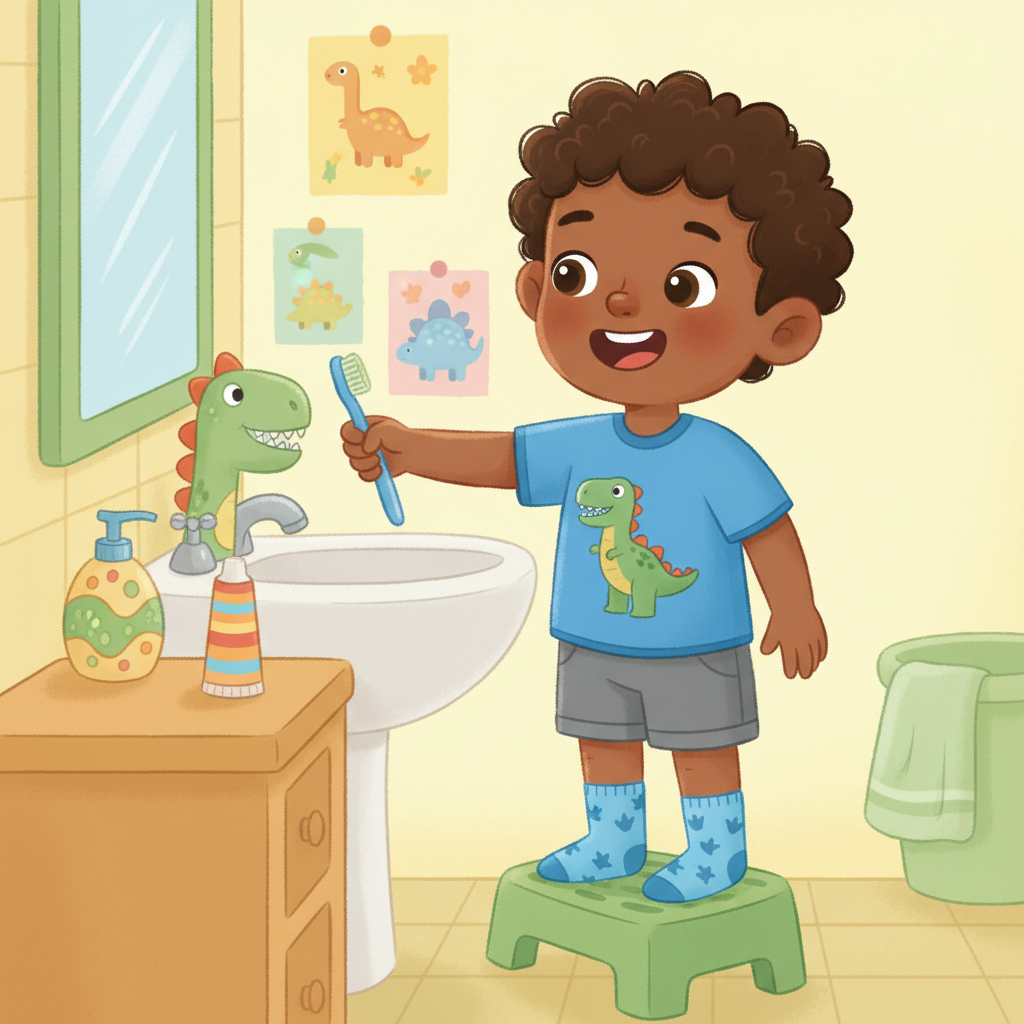
- Learning daily routines (brushing teeth, getting dressed, bedtime)
- Managing anxiety around predictable situations
- Understanding specific behavioral expectations in concrete contexts
- Reducing challenging behaviors triggered by uncertainty
Where the evidence is weaker:
- Developing broad social skills (making friends, reading social cues in varied contexts)
- Changing ingrained behaviors without additional reinforcement
- Teaching abstract social concepts (empathy, perspective-taking)
- Working as a standalone intervention without practice or modeling
The bottom line: Social stories are excellent for helping children understand and prepare for specific situations, but they're not a magic solution for complex social or behavioral challenges.
Why Does Personalization Make Such a Huge Difference?
Personalized social stories—written specifically for your child using their name, interests, and actual routines—are dramatically more effective than generic versions because they create immediate relevance and emotional connection. A generic story about "a child" feels abstract; a story about your child in your home feels real.
Consider the difference:
Generic version: "A child goes to the dentist. The dentist cleans teeth. It is okay to go to the dentist."
Personalized version: "My name is Maya. Tomorrow I'm going to Dr. Chen's office for a cleaning. Dr. Chen is nice. She will count my teeth with a special tool. It might feel tickly but it doesn't hurt. After, I get to choose a sticker from the treasure box. I am brave when I go to the dentist."
The personalized version includes:
- Your child's actual name and interests
- The real dentist's name
- Specific sensory details ("tickly")
- A concrete reward your child actually values
- Language your child uses and understands
Research shows this specificity matters because:
- Relevance increases engagement – Children pay attention to stories about themselves
- Concrete details reduce anxiety – Knowing exactly what will happen (including sensory experiences) is far less frightening than vague expectations
- Familiar language aids comprehension – Stories using your child's vocabulary and sentence structure are easier to understand and remember
- Connection to real rewards motivates – Mentioning something your child actually cares about makes the story feel worthwhile
This is why GrowTale's approach to social stories emphasizes personalization. Generic stories have their place, but when you can create a story tailored to your child's specific situation, interests, and needs, effectiveness jumps dramatically.
What Are the Most Common Mistakes Parents Make With Social Stories?
Parents often create social stories that are too long, too complex, too directive, or used only once—all of which dramatically reduce effectiveness. Understanding these pitfalls helps you avoid them.
Mistake #1: Making the story too long or complex
Children with autism and ADHD often have strong attention but limited working memory. A 10-paragraph story loses them. Keep it to 5-8 sentences maximum. Each sentence should be simple, concrete, and directly relevant.
Mistake #2: Using abstract language or idioms
Saying "I need to be a good listener" is abstract. Better: "I look at the teacher. I keep my hands quiet. I listen to the words." Avoid metaphors, sarcasm, and figurative language—they confuse children who think literally.
Mistake #3: Making it too directive (telling instead of describing)
A story that says "I must sit still" or "I have to be quiet" can feel controlling and trigger resistance. Instead: "When we sit in circle time, most children sit on the carpet. Some children sit on chairs. I usually sit on the carpet. Sitting still helps me listen to the story."
The difference is subtle but powerful: describing what usually happens is less likely to provoke defiance than commanding what must happen.
Mistake #4: Reading it once and expecting it to stick
One reading isn't enough. Effective social story use requires repetition. Read it 3-5 times before the situation occurs, then revisit it afterward. Some families read their social stories weekly as part of routine.
Mistake #5: Using a generic story when personalization is possible
A story about "a child" doesn't land the way a story about your child does. The effort to personalize pays enormous dividends.
Mistake #6: Forgetting to include sensory details
Children with autism and sensory sensitivities need to know what things will feel, sound, smell, and look like. "The haircut place is loud" is vague. "The haircut place has a loud sound from the hair dryer. It sounds like a big fan. I can cover my ears if it's too loud."
How Can Parents Actually Use Social Stories Effectively at Home?
Effective social story use involves creating or selecting personalized stories, reading them repeatedly before and after the target situation, pairing them with practice or modeling, and adjusting based on your child's response. Here's a practical framework:
Step 1: Identify the specific challenge
Don't try to address "social skills" broadly. Instead, pick one concrete situation: "My child struggles with transitions from play to dinner" or "Bedtime is chaotic every night" or "Getting a haircut causes extreme anxiety."
Step 2: Create or customize a social story
You can:
- Write one yourself (5-8 sentences, first-person, concrete language)
- Adapt an existing story to your child's specific situation
- Use a tool like GrowTale to generate a personalized story
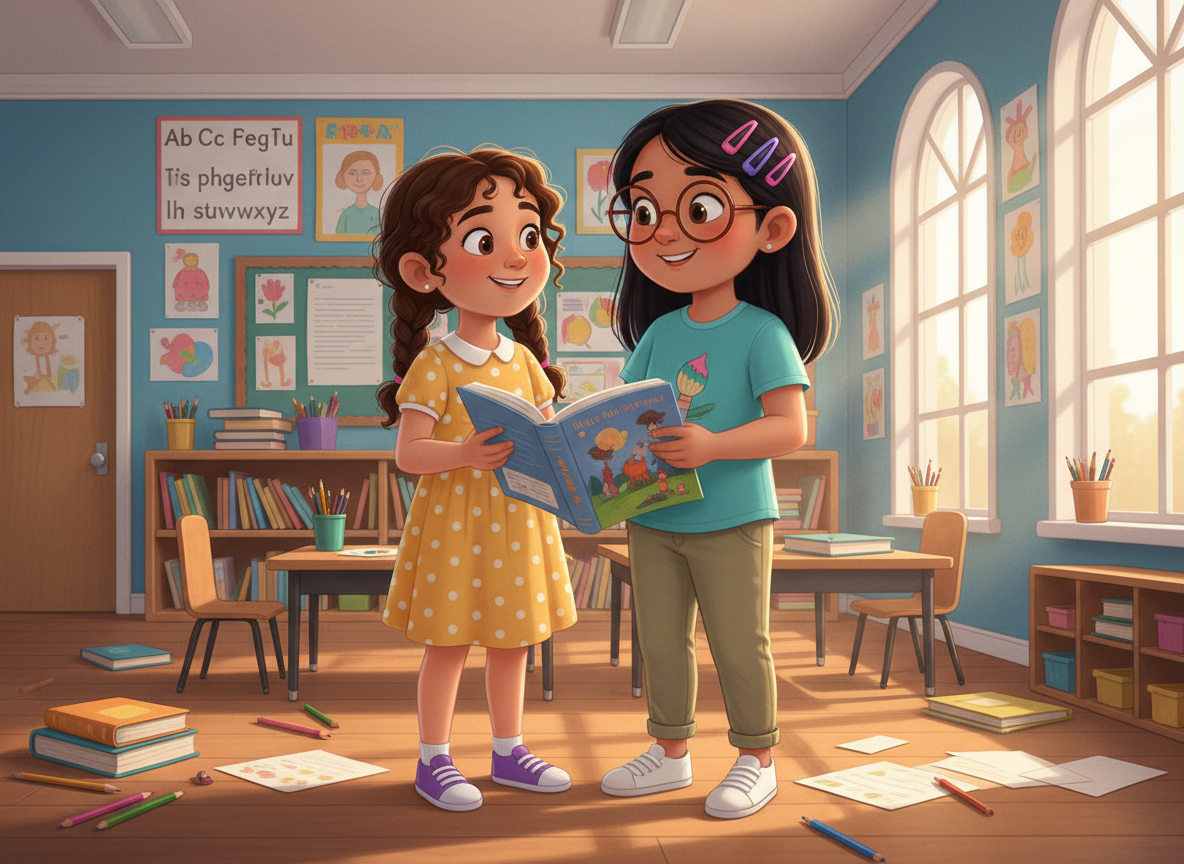
For example, if bedtime is your challenge, you might adapt a story like Getting Ready for School into a bedtime version, or create one specific to your child's bedroom, routine, and interests.
Step 3: Build repetition into your routine
Read the story:
- 3-5 times in the week before the situation
- Once the morning of, if possible
- Once afterward to reinforce success
Some families read their social stories weekly as part of Sunday planning or bedtime routine.
Step 4: Pair the story with practice or modeling
A social story alone isn't enough for complex behaviors. Combine it with:
- Role-playing (you act out the scenario, then your child does)
- Visual supports (pictures showing each step)
- Actual practice in a low-stakes way
- Positive reinforcement when your child follows the story
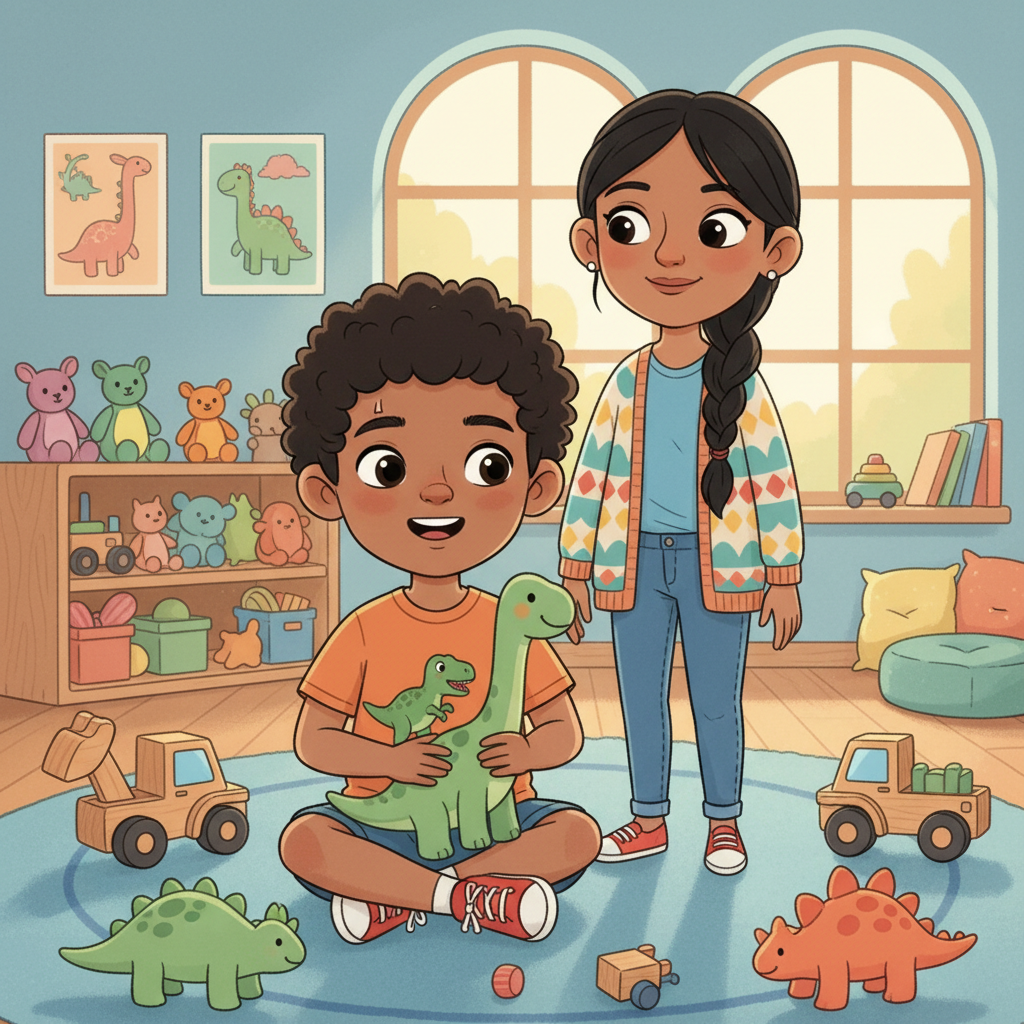
For instance, if you're using a story about Taking Turns With Friends, read the story, then practice taking turns with a game, and praise your child specifically when they wait their turn.
Step 5: Observe and adjust
After using a social story for 2-3 weeks, notice:
- Is your child's anxiety decreasing?
- Are they displaying the desired behavior more often?
- Do they ask to read the story again?
- What parts seem to resonate most?
If it's not working, the story might need adjustment (too long, wrong language, missing details, not personalized enough).
Practical example: Preparing for a doctor's visit
- Identify challenge: Your child has extreme anxiety about doctor's appointments
- Create story: Write a personalized story mentioning the doctor's name, what the office looks like, what will happen ("The doctor will listen to my heart with a cold tool"), and what happens after ("We get a sticker")
- Build repetition: Read it 4 times that week, once the morning of the appointment
- Pair with practice: Let your child use a toy stethoscope on a stuffed animal, modeling what the doctor will do
- Reinforce: After the appointment, read the story again and celebrate: "You were so brave, just like in your story!"
Stories like My Study Space and Routine or Asking for Help Shows Strength can be adapted for school-related anxieties using this same framework.
Why Do Professionals Still Recommend Social Stories If the Evidence Is Mixed?
Despite mixed evidence, social stories remain widely recommended because they're low-cost, low-risk, evidence-supported for specific applications, and often produce meaningful improvements when implemented well. They're also one of the few interventions that parents can easily create and control themselves.
Here's why they've remained a cornerstone of autism and ADHD support:
1. They work for the right situations
When used for transitions, routines, and anxiety-provoking situations, the evidence is solid. They're not meant to be a comprehensive social skills program—they're a targeted tool.
2. They're accessible and empowering
Unlike many therapies requiring a specialist, parents can create effective social stories themselves. This accessibility is powerful.
3. They align with how many autistic children learn
Many children with autism are strong readers and visual learners. Written narratives leverage these strengths.
4. They're part of a broader toolkit
No single intervention "fixes" autism or ADHD. Social stories work best as part of a comprehensive approach including therapy, structure, sensory support, and accommodation.
5. The harm is minimal
Unlike some interventions that carry risks, a well-written social story at worst doesn't help and at best significantly reduces anxiety and improves behavior. The risk-benefit ratio is favorable.
Frequently Asked Questions
Can social stories help with ADHD and anxiety, or just autism?
Social stories can absolutely help with ADHD and anxiety. They're particularly useful for children with ADHD who struggle with transitions or understanding expectations, and for anxious children who benefit from knowing exactly what to expect. The same principles apply: personalization, concrete language, and repetition. Children with ADHD might benefit from even shorter stories with more visual supports.
How many times should I read a social story before it "works"?
There's no magic number, but research suggests 3-5 readings before the situation, plus occasional reinforcement afterward, is a good target. Some children need more repetition; others grasp it faster. Watch your child's behavior and anxiety level—when you notice improvement, you're in the right range. For ongoing situations (like bedtime), weekly readings help maintain the benefit.
What's the difference between a social story and a visual schedule or social script?
A social story explains why something happens and describes the situation from your child's perspective. A visual schedule shows steps in sequence with pictures. A social script is exact words to say in a situation. They're complementary tools. You might use a social story to explain why we take turns, a visual schedule showing turn-taking steps, and a social script with exact words like "Your turn, my turn." Using all three together is often more effective than any single tool.
My child loved the social story the first time but refuses to read it again. What do I do?
This is common and usually means the story has served its purpose—your child understands the situation and doesn't need reassurance anymore. Stop pushing it; you've succeeded! If the anxiety returns, reintroduce it. If your child refuses because they're bored, try different formats (audio version, animated version, illustrated version) or create a new story about a related situation. Variation prevents monotony while maintaining the benefit.
The Bottom Line
Social stories work—but not as a magic cure and not universally. They're exceptionally effective for helping children understand and prepare for specific situations, manage transitions, and reduce anxiety around predictable events. When personalized to your child's actual life, language, and interests, their effectiveness jumps dramatically.
The research shows us that social stories are best used as part of a comprehensive approach that includes practice, modeling, reinforcement, and other supports tailored to your child's needs.
If you're considering social stories for your child, start with a specific challenge (not a broad goal), create or customize a story that's deeply personalized to your child's situation, build repetition into your routine, and pair it with practice. Watch what happens over 2-3 weeks. You'll likely see meaningful improvement in your child's understanding, comfort, and behavior.
If you'd like a personalized version of a social story for your child's specific situation—whether it's Brushing My Teeth at Night, managing When Plans Change, or navigating a completely unique challenge—you can create one free at GrowTale. The more specific you make it to your child's actual life, the more powerful it becomes.