Key Takeaways
- Autistic children often struggle with friendships due to differences in reading social cues, understanding reciprocity, and managing sensory overload in group settings—not because they don't want friends.
- Teaching friendship skills explicitly through social stories, scripts, and role-play gives autistic children the tools they need to navigate social interactions.
- One genuine friendship is protective against depression and anxiety; quality matters far more than quantity when it comes to friendships for autistic kids.
- Structured one-on-one playdates, interest-based clubs, and supportive peer pairings create lower-pressure environments where friendships can naturally develop.
- Respecting your child's social preferences and pace—whether they're introverted, prefer online friendships, or need longer warm-up times—is essential to their wellbeing.
Why Do Autistic Children Struggle to Make Friends?
Autistic children often want friendships but face specific challenges with reading social cues, understanding the unwritten rules of reciprocity, and managing sensory or social overwhelm in group settings. This isn't a lack of desire—it's a difference in how they process and navigate social information.
Many autistic kids describe feeling like they're watching a movie in a foreign language without subtitles. They may miss facial expressions, tone shifts, or the subtle back-and-forth rhythm that neurotypical peers take for granted. A friend might look away, and an autistic child doesn't realize this means "I need a break from this conversation." Another child might not understand that friendship involves both talking and listening—they love sharing their special interest but don't notice their peer's glazed expression.
Group settings add another layer of complexity:
- Sensory overload: Multiple voices, overlapping conversations, and unpredictable movements can be overwhelming.
- Unwritten social rules: Neurotypical children often absorb these implicitly; autistic children usually need them explained.
- Executive function demands: Managing turn-taking, remembering social scripts, and monitoring your own behavior simultaneously taxes cognitive resources.
- Anxiety about "doing it wrong": After repeated social missteps, many autistic children become hesitant to initiate friendships.
According to research from the Interactive Autism Network, approximately 50% of autistic children report having no reciprocal friendships, compared to about 5% of neurotypical peers.
The good news? These challenges are not insurmountable. With explicit teaching, the right environment, and patience, autistic children can develop meaningful friendships.
How Can You Teach Friendship Skills Explicitly?
Friendship skills that neurotypical children absorb naturally—like taking turns, reading facial expressions, and knowing when to join a conversation—can be taught directly to autistic children through social stories, scripts, and role-play. This isn't remedial; it's scaffolding.
Social stories are one of the most effective tools. Created by Carol Gray, these short narratives describe social situations from the child's perspective, explaining what happens, why, and what the expected behavior is. Unlike a lecture, a social story feels like a gentle guide.
For example, before a playdate, you might read a story about what happens during a playdate—taking turns with toys, asking before joining an activity, what to do if you feel upset. GrowTale's "Making a New Friend" story walks children through the experience of meeting someone new, which can ease anxiety.
Step-by-step approach to teaching friendship skills:
- Identify the specific skill your child needs (e.g., "joining a conversation without interrupting").
- Create or find a social story that breaks down the skill into concrete steps.
- Read the story together regularly—before the social situation happens and at calm times.
- Role-play the scenario with your child. You play the peer; your child practices the skill.
- Debrief after real interactions: "You did great waiting for your turn to talk. Next time, you might try asking a question about what they said."
Scripts are another powerful tool. Give your child specific words to use:
- "Can I play with you?"
- "That's cool. I like [topic] too."
- "Do you want to take a break?"
- "I'm sorry I interrupted. Can you say that again?"
Children who struggle with spontaneous conversation often feel relief when they have a few go-to phrases. Scripts remove the cognitive load of generating language in real-time.
Role-play makes this practice fun and low-stakes. Exaggerate mistakes so your child can laugh and learn. "Oh no, I just talked the whole time about my favorite video game and didn't ask you anything! What should I do differently?"
Research from the University of Michigan found that explicit social skills instruction combined with peer support significantly improved friendship quality and reduced social anxiety in autistic adolescents.
What Makes One-on-One Playdates More Successful Than Group Hangouts?
One-on-one playdates in predictable, structured settings remove sensory overwhelm and the cognitive demand of managing multiple social relationships simultaneously, making them ideal for building initial friendships. Group settings come later, once your child has practiced and feels more confident.
Here's why one-on-one is powerful:
- Lower sensory input: One voice, one set of movements, one conversation thread.
- Easier to read: Your child can focus on understanding one peer's communication style.
- Fewer unwritten rules: With two people, the social dynamics are simpler.
- Time to warm up: Autistic children often need 10-15 minutes to "boot up" socially. In a group, the activity might end before they feel comfortable.
- Easier to recover from mistakes: If your child says something awkward, one peer is more forgiving than a group.
How to structure a successful playdate:
- Choose a peer carefully: Look for someone patient, kind, and ideally with a shared interest. Ask the teacher or school counselor for suggestions—they often know which kids would be good matches.
- Keep it short: 45-60 minutes is ideal for younger children; 60-90 minutes for older kids. Short and positive is better than long and exhausting.
- Plan a structured activity: Open-ended playtime ("just play together") is harder for autistic kids than guided activities. Try building with LEGOs, playing a board game, drawing, or watching a movie together.
- Minimize transitions: Pick one location and one activity when possible. Transitions are cognitively demanding.
- Have a calm-down space: If your child gets overwhelmed, they should be able to step away without judgment.
- Coach before and after: Before the playdate, review what you'll do together and any social goals ("We're going to take turns picking what game to play"). After, celebrate successes and gently discuss what was hard.
Stories like "Taking Turns With Friends" and "When My Friend Needs Help" prepare children for the specific dynamics of one-on-one interaction.
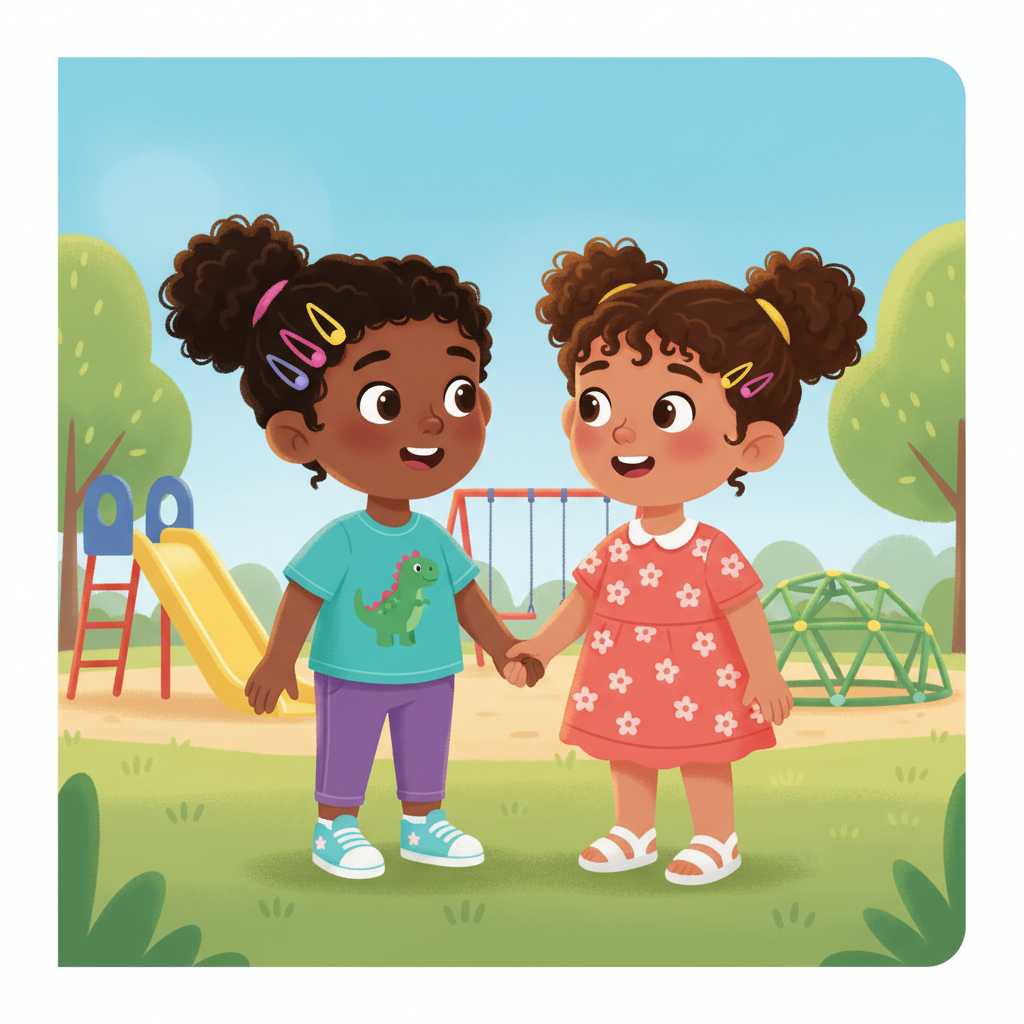
Start with playdates at your home, where your child feels safe. Once they're comfortable, try neutral locations like a park or community center.
How Can Interest-Based Clubs Help Your Child Find Friends?
Interest-based clubs and classes—robotics teams, art classes, D&D groups, coding clubs—are friendship goldmines for autistic children because they provide a built-in conversation topic and shared purpose, reducing the pressure to make small talk. When everyone's focused on something concrete, social interaction feels less performative.
Autistic children often have deep, passionate interests. Lego, anime, coding, animals, history—these aren't just hobbies; they're sources of joy and expertise. Clubs centered on these interests create natural opportunities for connection.
Why this works:
- Shared purpose: Everyone's there for the same reason, so there's an automatic conversation starter.
- Structured interaction: The activity provides the structure; your child doesn't have to generate it.
- Built-in social script: "What are you building?" or "Did you watch the new episode?" become natural questions.
- Acceptance of difference: Many clubs and communities (especially STEM, gaming, and anime spaces) are more accepting of neurodivergent communication styles.
- Repeated exposure: Seeing the same peers weekly helps your child get comfortable with them.
Finding the right club:
- Ask your child about their interests, no matter how niche.
- Search your community for clubs, classes, or meetups related to those interests. Libraries, community centers, schools, and online platforms often host these.
- Visit or observe first. Some clubs are more welcoming and well-organized than others.
- Look for clubs with a clear structure and adult supervision—these tend to be more inclusive.
- Consider online communities if in-person options are limited. GrowTale's "Kai's Safe Online Friends" explores how online friendships can be meaningful and safe.
Your role is to facilitate and support, not force. If your child tries a club and hates it, that's okay. Keep exploring.
What's the Role of Supportive Peers and School Partnerships?
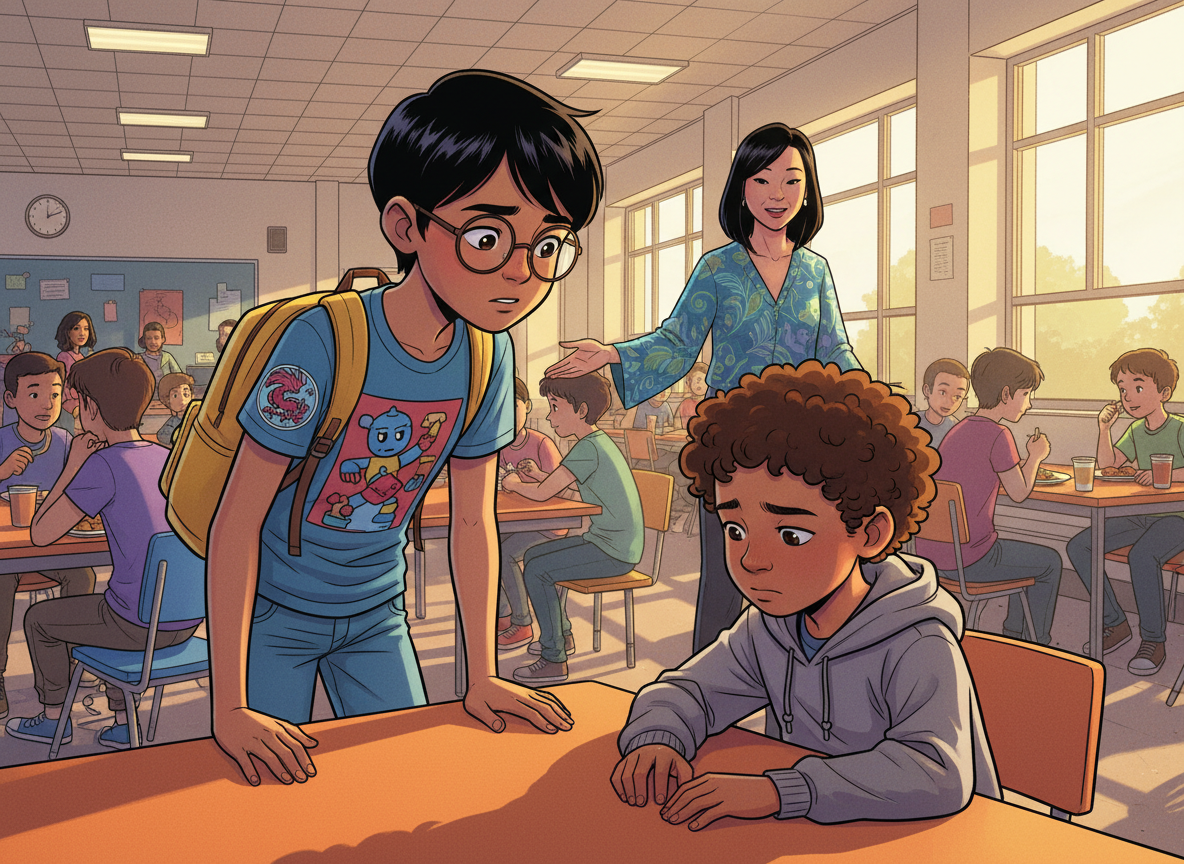
Pairing your autistic child with a kind, socially aware peer at school—often through a formal peer buddy program or informal teacher suggestion—provides daily opportunities for low-pressure interaction and models healthy friendship. These peers often become genuine friends, not just assigned helpers.
The best peer buddies have certain qualities:
- Patient and non-judgmental
- Willing to explain unwritten social rules without condescension
- Interested in the autistic child's interests (or at least willing to listen)
- Not embarrassed to be seen with the autistic child
- Stable and consistent
Work with your child's teacher or school counselor to identify potential peer buddies. Many schools have formal peer support programs; if yours doesn't, you can suggest creating one.
What peer buddy relationships look like:
- Sitting together at lunch
- Partnering on group projects
- Inviting your child to join activities at recess
- Explaining social situations ("That's why everyone's laughing—the teacher made a joke")
- Advocating for your child when peers are unkind
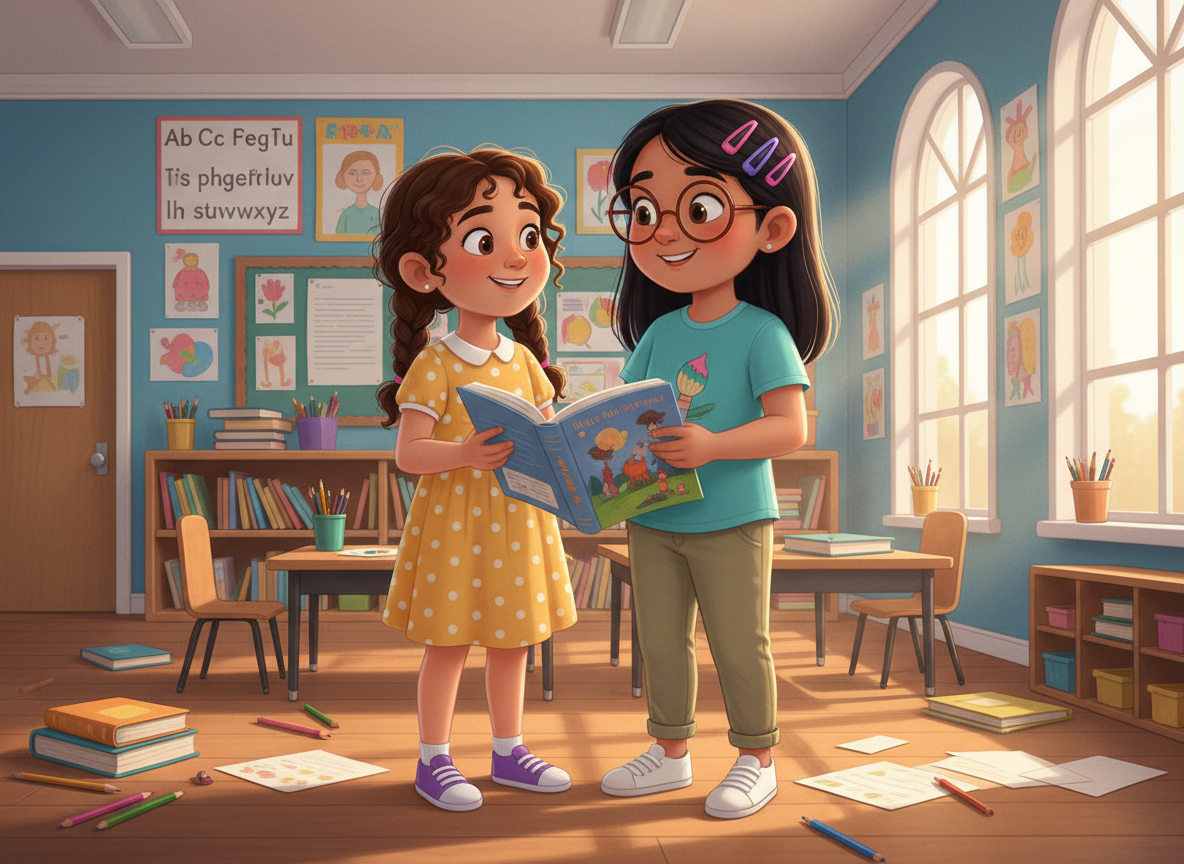
Stories like "Working Together on Projects" help your child understand and value peer collaboration.
Be cautious about programs that position the peer buddy as a caretaker rather than a friend. The goal is genuine friendship, not charity. Rotate peer buddies occasionally to prevent burnout and create multiple connections.
Why Does Having Just One Friend Matter So Much?
Research shows that having even one genuine, reciprocal friendship is deeply protective against depression, anxiety, and social isolation in autistic children—quality matters infinitely more than quantity. One real friend is worth far more than a dozen surface-level acquaintances.
A study published in the Journal of Autism and Developmental Disorders found that autistic adolescents with at least one close friendship reported significantly lower rates of depression and anxiety, regardless of the total number of friendships.
One friend means:
- Someone to sit with at lunch
- Someone who texts or messages
- Someone who invites your child to things
- Someone who accepts your child's quirks
- Someone who provides emotional support
- A buffer against bullying and exclusion
Many parents feel pressure to help their autistic child build a large social circle. Resist this. If your child has one friend who genuinely likes them and they like back, that's a win. That's success. That's protective.
Focus on depth, not breadth. Help your child maintain and nurture the friendships they do have. A weekly text, a monthly outing, consistent presence—these things matter far more than trying to manufacture new friendships constantly.
If your child doesn't have a close friend yet, that's okay too. Keep working on the strategies above. Some friendships take time to develop.
How Do You Respect Your Child's Social Preferences?
Not all autistic children want the same kind of friendships; some are introverted and prefer one or two close friends, others prefer online communities, and some are content with parallel play or activity-based friendships rather than emotionally intimate bonds. Honoring these preferences is crucial to your child's wellbeing and self-esteem.
There's an unspoken assumption that all children should want lots of friends and be socially outgoing. This isn't true. Some autistic children are introverted. Some are content with acquaintances. Some prefer online friendships where they can control the pace and take breaks. Some thrive with activity-based friendships ("We do robotics together") rather than emotionally intimate ones.
None of these are failures. They're differences.
Ask yourself:
- Does my child seem happy and connected, even if they have few friends?
- Are they being bullied or excluded, or are they choosing solitude?
- Do they express loneliness, or am I projecting my own social values onto them?
- What kind of social interaction energizes vs. drains them?
- What would meaningful connection look like for them, not for me?
If your introverted autistic child is content with one friend and prefers quiet time, that's healthy. Support that. If your child finds deep connection online with people who share their interests, that's valid. If your child prefers side-by-side activities to face-to-face conversation, that's okay.
The goal isn't to make your child "normal." The goal is to help them feel connected, valued, and safe—in whatever way makes sense for them.
Stories like "My Feelings Throughout the Day" help children understand their own emotional landscape and communicate what they need.
Frequently Asked Questions
What if my child doesn't want friends or seems content alone?
It's important to distinguish between genuine contentment and withdrawal due to anxiety or past rejection. If your child seems happy, engaged, and not expressing loneliness, they may simply be introverted—which is fine. However, if they're isolating due to fear or shame, gently work on building confidence and skills. Watch for signs of depression or anxiety, which can masquerade as disinterest in friendships. If you're unsure, talk to their therapist or counselor.
How do I handle it if my child is being rejected or bullied by peers?
This requires immediate action. Document what's happening, communicate with the school, and work with counselors or therapists to build your child's resilience and coping skills. Consider whether a different school environment, classroom placement, or peer group might be better. Simultaneously, focus on building friendships in settings where your child is more likely to be accepted—clubs, online communities, or other contexts. Your child's safety and mental health come first.
Can social stories really help with friendships, or is that overstated?
Social stories are evidence-based and effective, but they're not magic. They work best when combined with other strategies: role-play, peer support, structured practice, and a supportive environment. Stories provide the "what" and the "why"; real-world practice provides the "how." For more on how social stories work, check out GrowTale's research on social stories for autism.
What if my child is much older (teen or adult) and has never had a friendship?
It's never too late. Older children and teens may benefit from more explicit, detailed social coaching; online communities (Discord servers, Reddit, gaming groups) where they can connect with others who share interests; and potentially therapy focused on social anxiety. The strategies remain similar—structured environments, shared interests, peer support—but may look different. Consider connecting your teen with autistic mentors or peer groups where they can see that autistic adults do have friendships and fulfilling social lives.
Friendship looks different for autistic children, and that's okay. Your job isn't to force your child into a neurotypical social mold; it's to help them find their people—the peers who get them, the communities where they belong, the connection that makes them feel less alone.
Start small. Pick one strategy from this article—maybe a social story, maybe a structured playdate, maybe a club based on their interests. Notice what works for your child. Celebrate small wins. Be patient with setbacks.
If you'd like a personalized version of friendship-building stories for your child, you can create one free at GrowTale. Our stories are tailored to your child's specific situation, making them even more powerful and relevant.
Your autistic child deserves connection. With patience, intention, and the right strategies, they can find it.