Key Takeaways
- Dental visits are uniquely challenging for autistic children due to sensory sensitivities, unpredictable routines, and loss of control in an unfamiliar environment
- Social stories and visual schedules help autistic children understand what to expect, reducing anxiety and building confidence before the appointment
- Communicating your child's sensory needs and autism diagnosis to the dentist allows them to adapt their approach and make the experience more comfortable
- Sensory-friendly strategies during the visit—like using noise-canceling headphones, requesting slower pacing, and taking breaks—can transform a stressful experience into a manageable one
- Positive reinforcement after the visit reinforces brave behavior and helps your child build resilience for future dental care
Why Do Dental Visits Feel So Difficult for Autistic Children?
Dental appointments combine sensory overload, unpredictability, and loss of control—three major triggers for autistic children. The dentist's office is a perfect storm of challenges: bright lights, unfamiliar sounds (the drill, suction), unexpected sensations in the mouth, and a stranger invading personal space without warning.
Many autistic children experience heightened sensory sensitivity. The high-pitched whine of the dental drill, the vibration of tools, the taste of fluoride, and the feeling of fingers in the mouth can feel overwhelming or even painful. Beyond sensory issues, dental visits disrupt routine and predictability—your child doesn't know exactly what will happen, in what order, or how long it will take.
There's also the issue of loss of control. Your child is lying back in an unfamiliar chair, unable to move freely, with someone they don't know working inside their mouth. For children who struggle with transitions and need predictability, this lack of agency can trigger significant anxiety.
According to research on autism and healthcare, autistic individuals are significantly more likely to avoid or delay dental care due to sensory sensitivities and anxiety—making preparation and planning essential.
How Can a Social Story Help Prepare Your Child for the Dentist?
A social story is a short, personalized narrative that walks your child through what will happen at the dentist, step-by-step, in calm, concrete language. Social stories work because they reduce the unknown. When your child knows exactly what to expect—from the moment you walk in the door to when you leave—anxiety drops significantly.
A dentist-focused social story should include:
- The journey: How you'll get to the dentist's office and what the waiting room looks like
- The greeting: Who will greet you and what they might say
- The chair and tools: Description of the dental chair, the light, the mirror, and instruments (without scary language)
- What the dentist will do: "The dentist will look at my teeth. The chair may move up and down. I might hear a quiet humming sound."
- Sensory details: Tastes, sounds, and sensations in neutral, factual language
- Coping strategies: "I can raise my hand if I need a break. Mom/Dad will be in the room."
- The end: "After the dentist checks my teeth, I'll get to leave and go home."
You can create a personalized social story for your child using GrowTale, which allows you to customize stories to match your child's specific dentist, sensory needs, and communication style. Stories that feature characters similar to your child—same age, similar interests—are even more effective.
Read the story together multiple times before the appointment. Many parents read it the night before and the morning of the visit. Some children benefit from reading it weekly for a month leading up to the appointment.
What Should You Tell Your Dentist About Your Child's Autism?
Before your appointment, contact the dentist's office and explain your child's autism diagnosis, specific sensory sensitivities, and communication style. This conversation is crucial and often makes the difference between a traumatic visit and a manageable one.
Here's what to communicate:
- Sensory sensitivities: "My child is sensitive to high-pitched sounds and bright lights. Can you dim the overhead light and warn her before using the drill?"
- Communication needs: "My child doesn't respond well to sudden changes. Can you explain each step before you do it?"
- Coping strategies: "He likes to hold something in his hand during stressful situations. Can he bring a fidget toy?"
- Stimming or self-soothing: "My daughter hums when she's anxious. This is how she self-regulates. It's okay if she does this."
- Breaks: "My son needs breaks every few minutes. Is it okay if we pause?"
- Non-verbal or communication differences: "My child is non-speaking but understands language. Please give her time to respond and don't rush."
Request a pre-visit tour if possible. Many pediatric dentists will let your child sit in the chair, see the tools, and get familiar with the space before the actual appointment. This reduces the "unknown" factor significantly.
Ask if the dentist can schedule your appointment at a quieter time of day, like early morning or late afternoon, to minimize waiting room stimulation.
What Are Practical Sensory-Friendly Strategies During the Visit?
During the appointment, sensory accommodations—like noise-reducing headphones, breaks, and clear communication—help your child stay calm and cooperative. Here are evidence-based strategies to request and use:
Before the appointment starts:
- Arrive 10-15 minutes early so your child can acclimate to the environment without feeling rushed
- Ask if your child can keep a comfort item (stuffed animal, fidget toy, blanket) within reach
- Establish a hand-raise signal that means "I need a break" so your child has control and agency
During the cleaning and exam:
- Use noise-canceling headphones or earplugs to muffle high-pitched sounds. Many dentists allow this.
- Dim the overhead light if possible, or ask if your child can wear sunglasses
- Request slower pacing: "Can you pause between each step and let my child adjust?"
- Use clear, concrete language: Instead of "This might feel a little weird," say "You will feel water and air on your teeth. It's cool and wet."
- Take frequent breaks: Even 30-60 second pauses help regulate the nervous system
- Keep a parent in the room if your child finds this calming. Many dentists allow this for anxious or autistic children.
After the exam:
- Praise specific behavior: "You did such a good job sitting still and raising your hand when you needed a break."
- Avoid forcing gratitude or smiling: Don't require your child to say "thank you" or perform social niceties if they're overwhelmed
- Transition gently: Give your child 5-10 minutes of quiet time before moving to the next activity
If your child has had a positive experience with daily routines like brushing teeth at home, reference that success. You might say, "Remember how you brush your teeth every night? The dentist is checking your teeth to make sure they stay healthy, just like brushing does."
How Do You Build Confidence With Practice and Preparation?
Repeated exposure to the dentist's office—through visits, social stories, and role-play—builds confidence and reduces anxiety over time. Your child's brain learns: "This is safe. I can handle this."
Here's a preparation timeline:
4-6 weeks before the appointment:
- Start reading a dentist-focused social story together 2-3 times per week
- Talk casually about the dentist: "In a few weeks, we're going to visit Dr. [Name]. She's a dentist. Her job is to keep teeth healthy."
- Watch child-friendly videos about dental visits (many are available on YouTube, created specifically for anxious kids)
2-3 weeks before:
- Increase social story reading to 4-5 times per week
- Do a practice visit if the dentist's office offers one. Let your child sit in the chair, touch the tools (if appropriate), and meet the staff
- Role-play at home: "You be the dentist and I'll be the patient," or vice versa. This gives your child a sense of control and understanding
1 week before:
- Read the social story daily
- Create a visual schedule showing the steps of the appointment in order (using pictures or words, depending on your child's literacy level)
- Review coping strategies: "If you feel worried, you can raise your hand and we'll take a break."
The day before:
- Read the social story once in the morning and once before bed
- Keep the day calm and predictable
- Avoid building up anxiety by over-explaining or reassuring excessively (which can signal that there's something to be afraid of)
The morning of:
- Stick to your normal routine as much as possible
- Read the social story one final time
- Use neutral, matter-of-fact language: "Today we're going to the dentist. We'll drive there, wait in the waiting room, and then Dr. [Name] will check your teeth."
If your child struggles with transitions in general, you might also reference the GrowTale story "When Plans Change" to help them understand that even when routines shift, they can manage it.
How Do You Reinforce Brave Behavior After the Visit?
Positive reinforcement after the appointment teaches your child that they handled a challenging situation successfully—and builds resilience for future dental care. This isn't about bribing; it's about acknowledging genuine effort and courage.
Immediately after the visit:
- Acknowledge specific bravery: "You sat in the chair even though it was uncomfortable. That took courage." (Not: "You were so good!" which is vague)
- Validate emotions: "I know the sounds were loud and that was hard. You managed it really well."
- Avoid punishment or shame if your child had a meltdown. Anxiety is not a behavior problem—it's a nervous system response.
Within 24 hours:
- Plan a low-key, sensory-calming activity your child enjoys: quiet time, a favorite snack, time outside, or a preferred activity
- Avoid overstimulating "rewards" like trips to amusement parks or loud environments—your child's nervous system is already taxed
- Read the social story again, but this time emphasize the parts your child did well: "You raised your hand when you needed a break. That was smart!"
In the following weeks:
- Notice and comment on dental self-care: "You brushed your teeth really well today. The dentist will be happy when we go back."
- Reference the successful visit when talking about future appointments: "Remember last time? You did such a good job. We'll do the same things next time."
If your child has difficulty managing emotions around challenging experiences, the GrowTale story "My Feelings Throughout the Day" can help them name and process what they felt during the dentist visit.
How Can You Maintain Dental Health Between Visits?
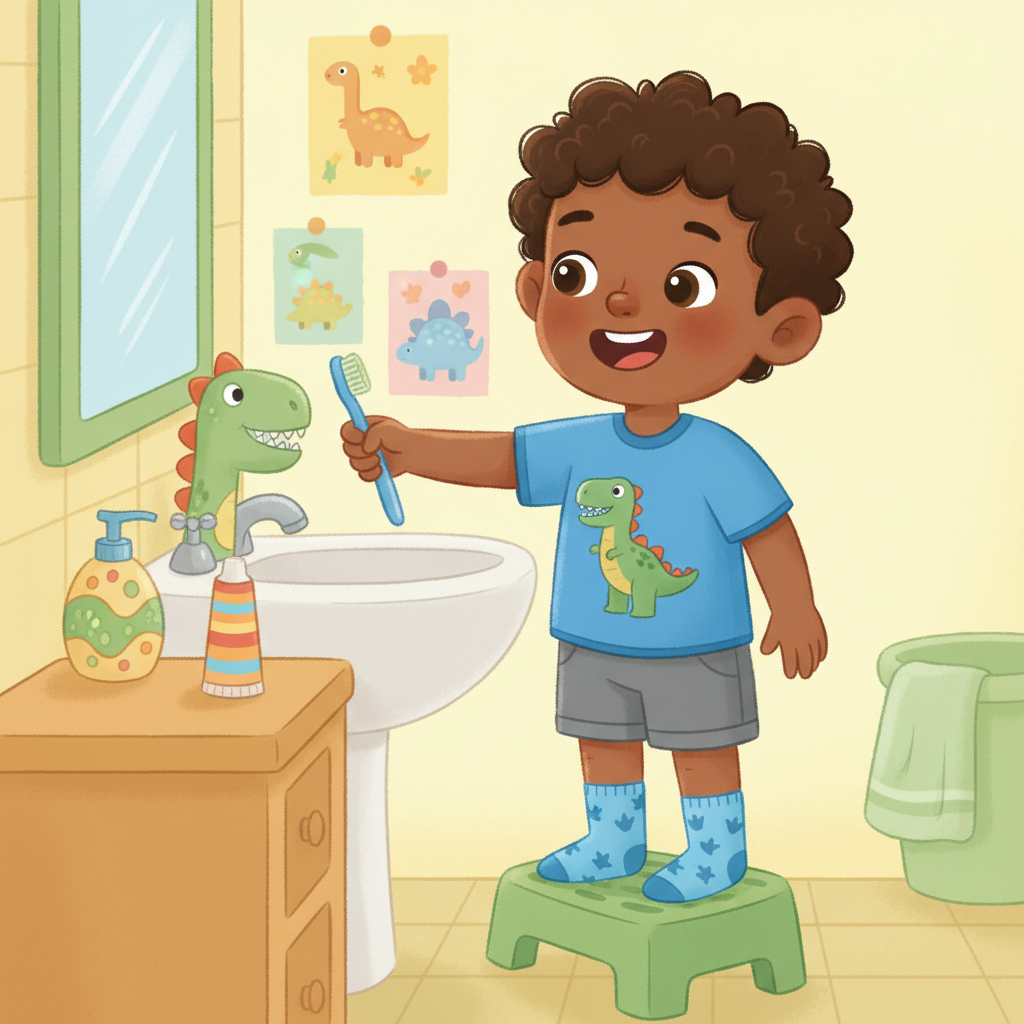
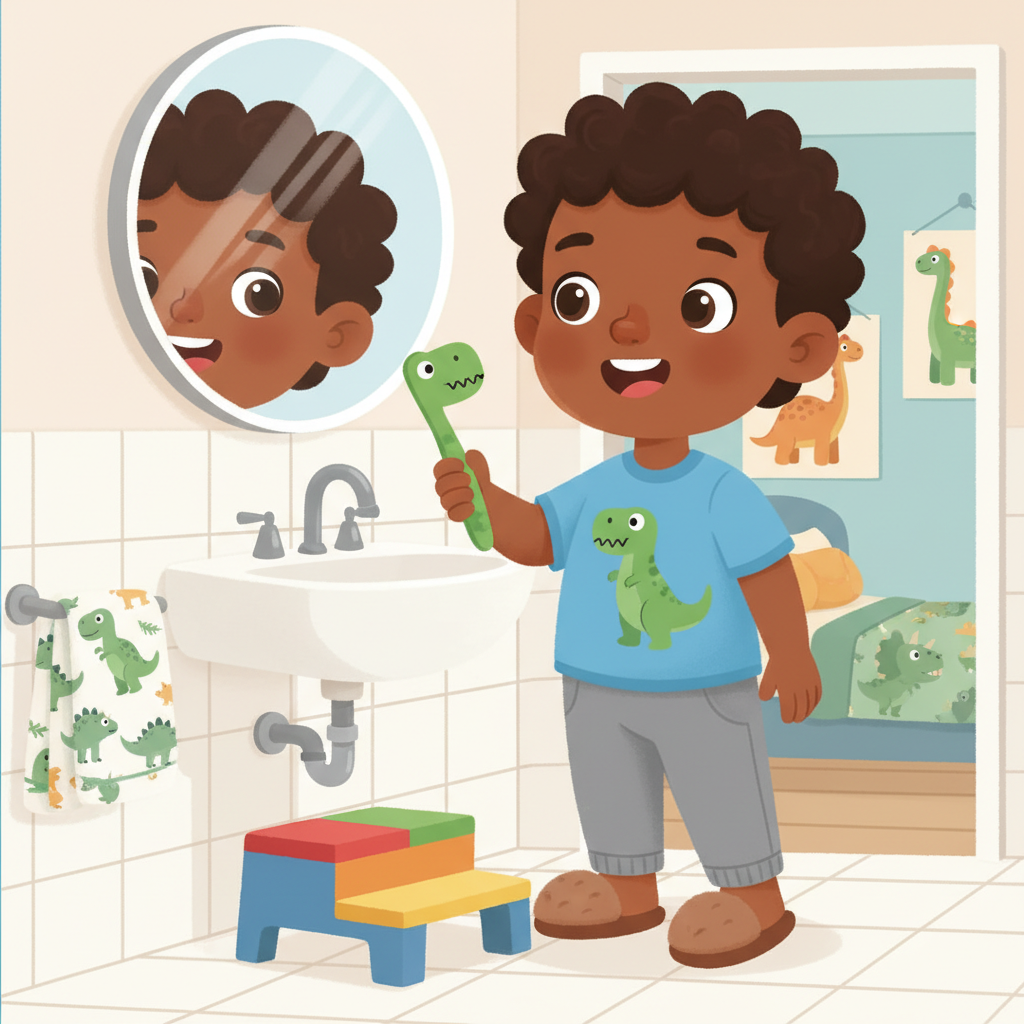
Consistent at-home dental care reduces the frequency of dental visits and builds your child's confidence in oral hygiene routines. The more comfortable your child is with tooth-brushing, the less anxiety they'll have at the dentist.
Make brushing a predictable routine:
- Brush at the same times every day (morning and night)
- Use the same toothbrush, toothpaste, and location
- Create a visual schedule showing the steps: wet toothbrush, apply toothpaste, brush upper teeth, brush lower teeth, rinse, done
- Let your child choose their toothbrush color or character to increase buy-in
Reduce sensory barriers:
- If mint toothpaste is overwhelming, try unflavored or fruit-flavored alternatives
- Use a soft-bristled toothbrush
- If the bathroom is too bright, dim the lights
- If your child is sensitive to the feeling of toothpaste, let them use less or rinse more frequently
GrowTale's story "Brushing My Teeth at Night" or "Marcus Brushes His Teeth" can help normalize and reinforce daily brushing habits. Stories are especially powerful when they feature a character your child relates to.
Frequently Asked Questions
What if my child has a meltdown during the dental appointment?
A meltdown is a sign of sensory or emotional overload, not misbehavior. Work with your dentist beforehand to establish a pause signal. When your child signals distress, pause the appointment, give them 1-2 minutes to regulate (deep breaths, quiet time, a drink of water), and then continue at a slower pace. If your child is too dysregulated to continue, it's okay to reschedule. One successful visit is better than forcing a traumatic one.
Should I tell my child's dentist about autism if my child is "high-functioning" or nonspeaking?
Yes, absolutely. Autism diagnosis is relevant regardless of support level. Sensory sensitivities, anxiety, and communication differences affect all autistic people differently. Providing this information helps the dentist customize their approach and prevent problems. You're not labeling your child—you're giving the dentist essential information to provide better care.
How often should my autistic child visit the dentist?
Most dentists recommend visits every 6 months for preventive care. However, if your child has significant dental anxiety or sensory sensitivities, ask your dentist if more frequent, shorter visits might be better. Some pediatric dentists offer "sensory-friendly" appointments or extended time slots specifically for anxious or autistic children. More frequent, less intense visits can be less stressful than longer appointments.
Can I use a social story to prepare my child for other medical visits too?
Absolutely. The same principles apply to doctor's visits, haircuts, eye exams, and other medical or healthcare appointments. Social stories work because they reduce the unknown and build predictability. If you'd like a personalized version of a medical visit story for your child, you can create one free at GrowTale. Customized stories that feature your child's name, their specific sensory needs, and the actual healthcare provider's name are most effective.
What if my child's dentist isn't willing to accommodate sensory needs?
Find a new dentist. Pediatric dentists, dentists with autism training, or those experienced with anxious children are typically more flexible and understanding. Many offices now advertise "sensory-friendly" or "special needs" appointments. It's worth calling multiple practices to find one that aligns with your child's needs. Your child's comfort and long-term relationship with dental care is worth the effort to find the right fit.